Understanding Magnesium Glycinate Quality for Optimal Health
When navigating the vast world of dietary supplements, not all minerals are created equal. Achieving high magnesium glycinate quality is essential for ensuring that the body can actually absorb and utilize the mineral effectively. Magnesium glycinate, a chelated form of magnesium bonded to glycine, is renowned for its superior bioavailability and gentleness on the digestive system. In this guide, we will explore the technical markers of premium quality, how to distinguish between various grades, and why choosing a professional supplier is critical for long-term wellness and product efficacy.

What Defines Premium Magnesium Glycinate Quality?
The quality of magnesium glycinate is primarily determined by the chelation process. True chelation occurs when one magnesium ion is bonded to two glycine molecules, creating a stable, neutral complex. Lower-quality versions are often "buffered," meaning they are mixed with magnesium oxide to increase the magnesium percentage on the label, but this significantly reduces absorption and increases the likelihood of laxative effects. High magnesium glycinate quality ensures a pure, non-buffered formula that maximizes bioavailability while remaining easy on the stomach.
Pro Tip: Always check the "Supplement Facts" panel. If you see "magnesium oxide" listed alongside glycinate, the product is likely buffered and does not meet the highest quality standards for purity and absorption.
The Importance of Purity and Lab Testing
Beyond the chemical bond, purity is a cornerstone of quality. Contaminants such as heavy metals (lead, arsenic, mercury) can inadvertently enter the production chain if raw materials are not sourced rigorously. Professional manufacturers employ HPLC (High-Performance Liquid Chromatography) and ICP-MS testing to verify the identity and purity of the compound. Ensuring consistent magnesium glycinate quality means providing a Certificate of Analysis (CoA) with every batch to guarantee that the product meets pharmaceutical-grade specifications.
Comparing Magnesium Glycinate Quality vs. Other Forms
Not all magnesium types serve the same purpose. While magnesium citrate is often used for digestion, and magnesium oxide is used for high-dose elemental magnesium, glycinate is the gold standard for sleep, anxiety, and muscle recovery. The difference in magnesium glycinate quality lies in its stability; it does not dissociate as quickly in the gut, allowing for a slower, more efficient absorption into the bloodstream.
Industrial Manufacturing Standards for High Quality
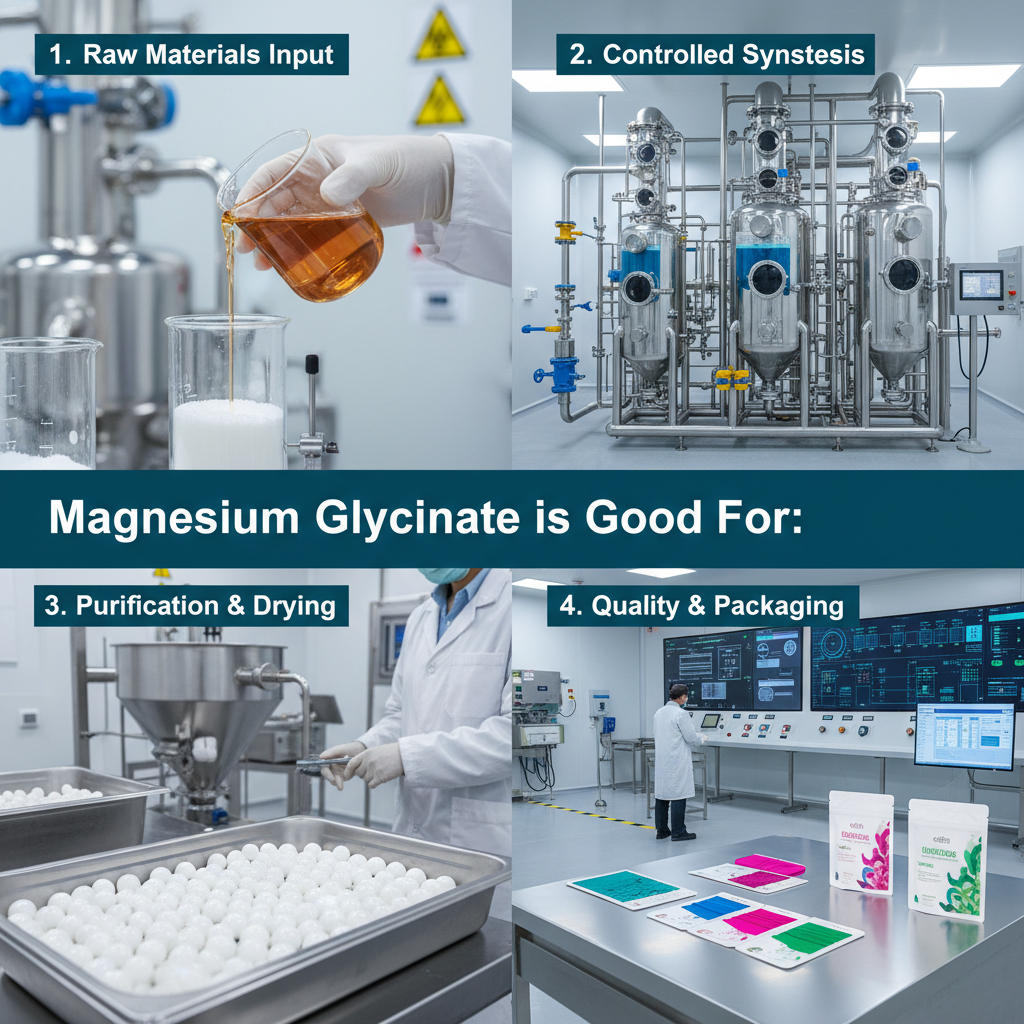
For B2B buyers and pharmaceutical brands, verifying magnesium glycinate quality requires looking at the manufacturing environment. GMP (Good Manufacturing Practice) certification is non-negotiable. The process must involve precise temperature control and molar ratios of glycine to magnesium to prevent the formation of impurities. High-quality powders should exhibit excellent flowability and low hygroscopicity, making them easier to encapsulate or tablet during the production phase.
Product Specifications and Quality Benchmarks
To provide a transparent view of what constitutes a high-grade product, we have outlined the typical specifications found in premium magnesium glycinate quality. These benchmarks ensure that the material is suitable for high-end nutraceutical applications, providing consistent dosages and safe consumption for the end consumer.
Conclusion: Choosing the Right Magnesium Source
Investing in high magnesium glycinate quality is not just about following a trend; it is about ensuring the physiological effectiveness of the supplement. From the precision of the chelation process to the rigor of third-party lab testing, every detail contributes to a product that is safe, absorbable, and effective. For brands and consumers alike, prioritizing purity over price ensures that the health benefits of magnesium—such as improved sleep and reduced anxiety—are actually realized. Choose a supplier committed to transparency and pharmaceutical standards to guarantee the best results.
Frequently Asked Questions (FAQs)
How can I tell if my supplement is "buffered" magnesium glycinate?
The easiest way to identify a buffered product is to examine the "Other Ingredients" or "Supplement Facts" section of the label. A pure magnesium glycinate product will list only magnesium glycinate (or bisglycinate). If you see "Magnesium Oxide" listed, the manufacturer has "buffered" the product. This is often done to increase the elemental magnesium count per capsule while keeping the cost low, but it reduces the overall magnesium glycinate quality and bioavailability.
Why is the glycine bond important for absorption?
The bond between magnesium and glycine allows the mineral to be absorbed through the dipeptide channel in the intestines rather than competing with other minerals for absorption in the ion channels. This "stealth" delivery system bypasses many of the common absorption barriers, reducing the amount of unabsorbed magnesium that stays in the colon, which is why high-quality glycinate doesn't cause the laxative effect associated with cheaper salts.
What should I look for in a CoA (Certificate of Analysis)?
A professional CoA for magnesium glycinate quality should include: 1) The exact batch number, 2) An assay percentage showing the actual magnesium content, 3) Heavy metal testing results (Lead, Cadmium, Mercury) with limits usually below 1-2ppm, and 4) Microbiological testing (Salmonella, E. coli, Yeast, and Mold). If a supplier cannot provide a batch-specific CoA, the quality cannot be guaranteed.
Is magnesium bisglycinate the same as magnesium glycinate?
Yes, they are effectively the same. "Bisglycinate" is the more precise chemical term, indicating that there are two (bi-) glycine molecules attached to each magnesium atom. In the industry, the terms are used interchangeably to describe the same highly absorbable, chelated form of magnesium. Both terms refer to the same high-quality standard of mineral supplementation.