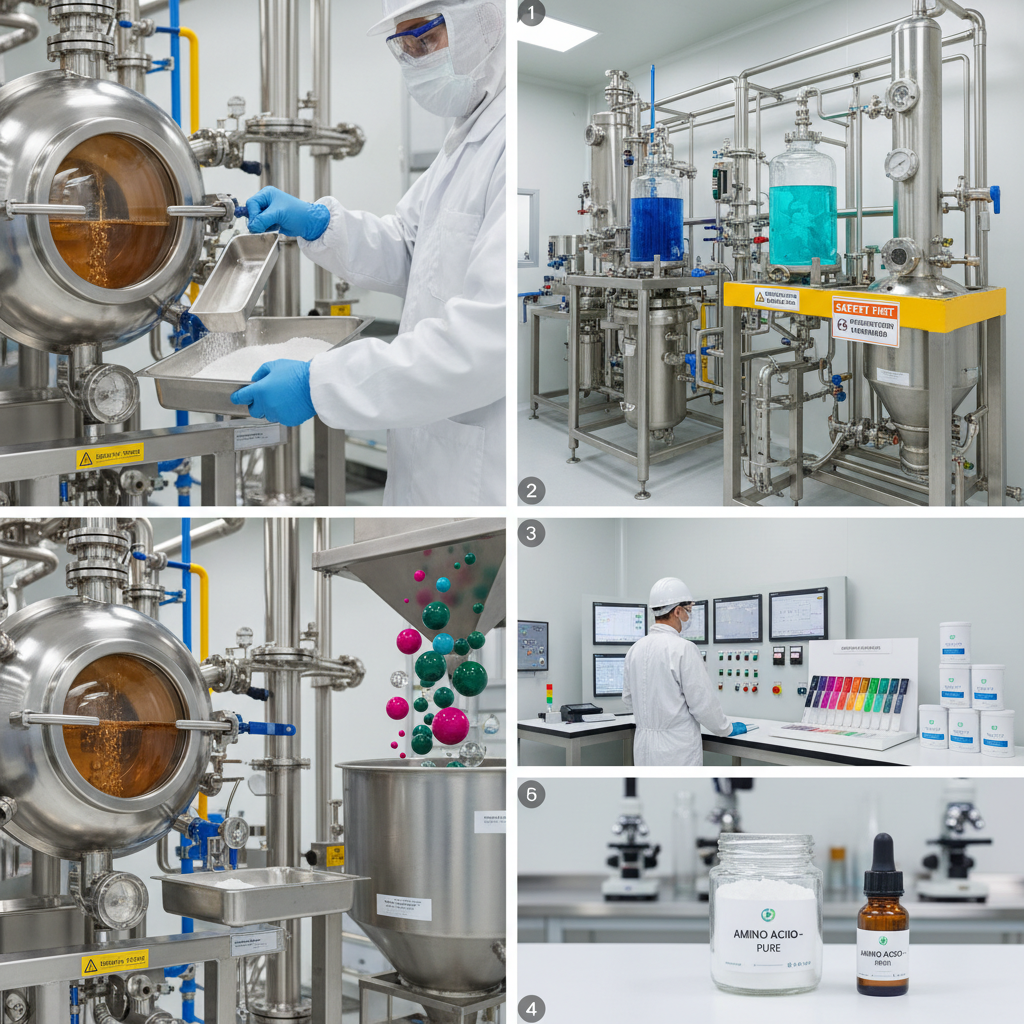
In the evolving landscape of specialized biochemistry, the role of imino acid has become increasingly pivotal for enhancing nutritional efficiency in both livestock and crop science. As the global demand for sustainable protein sources and high-yield agriculture rises, understanding the structural nuances of these compounds allows manufacturers to optimize bioavailability and metabolic absorption.
The strategic integration of imino acid derivatives into feed additives and bio-fertilizers addresses a critical gap in traditional nutrition, providing the essential building blocks required for rapid growth and stress resilience. By shifting from generic nutrient supplementation to targeted biochemical applications, the industry is witnessing a revolution in how we support biological systems.
Whether applied in precision breeding or advanced soil enrichment, the versatility of imino acid ensures that essential nitrogen and carbon structures are delivered efficiently. This guide explores the technical depth, industrial application, and future trajectory of these vital compounds within the global chemical manufacturing sector.
Global Relevance of Imino Acid in Modern Industry
On a global scale, the production and application of imino acid are intrinsically linked to the security of the global food supply chain. With the UN forecasting a significant increase in the global population by 2050, the pressure on livestock breeding and crop yields has never been higher. Imino acids provide the necessary biochemical scaffolding to improve feed conversion ratios (FCR), reducing the waste of raw materials and lowering the environmental footprint of industrial farming.
Furthermore, the adoption of ISO-certified manufacturing processes for imino acid has standardized purity levels, ensuring that these additives do not introduce contaminants into the food chain. This industrialization allows for scalable solutions that can be deployed across diverse climates, from the intensive farming hubs of East Asia to the expansive agricultural zones of Brazil and North America.
Defining the Biochemical Nature of Imino Acid
At its most fundamental level, an imino acid is an organic compound derived from amino acids where the amino group is replaced by an imine group, creating a cyclic or linear structure that alters its reactivity and biological interaction. Unlike standard alpha-amino acids, the imino structure provides unique conformational rigidity, which is essential for the stability of proteins like collagen in animals and certain protective polymers in plants.
In the context of modern industry, these compounds serve as critical precursors for high-performance feed additives. By modifying the molecular geometry, manufacturers can create versions of imino acid that are more resistant to degradation during the pelleting process of feed production, ensuring that the active nutrients reach the digestive tract of the animal intact.
This biochemical distinction is not merely a theoretical detail; it is the basis for humanitarian efforts to combat malnutrition. By utilizing synthetic imino acid pathways, scientists can produce nutrient-dense supplements that are more easily absorbed by livestock in underdeveloped regions, thereby increasing the availability of affordable animal protein for local populations.
Core Components Influencing Imino Acid Efficacy
The effectiveness of any imino acid application depends heavily on its molecular stability. The ability of the compound to maintain its structural integrity under varying pH levels—particularly within the acidic environment of the stomach or the alkaline nature of certain soils—determines the actual percentage of the nutrient that is bioavailable to the organism.
Bio-absorption rates are the second critical factor. Because imino acid possesses a different polarity compared to standard amino acids, it often requires specific carrier molecules or chelation processes to cross biological membranes efficiently. Optimizing this transport mechanism is where high-end chemical manufacturing provides the most value.
Finally, cost-efficiency and purity dictate the commercial viability of these products. The removal of residual catalysts and side-products during the synthesis of imino acid is essential to prevent adverse reactions in sensitive livestock, such as piglets or calves, where metabolic pathways are still developing.
Global Applications and Practical Use Cases
In real-world agricultural contexts, imino acid is extensively used as a biostimulant in foliage sprays across the European Union, where strict regulations favor organic-based growth enhancers over synthetic hormones. These applications help crops recover from frost or drought stress by regulating osmotic pressure within the plant cells.
In the livestock sector, particularly within the aquaculture industry in Southeast Asia, imino acid complexes are integrated into fish meal to promote faster muscle development and improve the immune response against aquatic pathogens. This reduces the reliance on antibiotics, leading to a safer and more sustainable seafood supply.
Comparative Efficacy of Imino Acid Application Methods
Tangible Advantages and Long-Term Value
The adoption of high-purity imino acid provides immediate economic benefits by reducing the volume of feed required to reach target weights in livestock. This logical shift toward precision nutrition lowers operational costs for farmers while simultaneously enhancing the welfare of the animals through optimized health profiles and reduced metabolic stress.
Beyond the balance sheet, the use of imino acid represents a commitment to innovation and sustainability. By improving nutrient uptake, we reduce the excretion of excess nitrogen into the environment, thereby mitigating groundwater contamination and greenhouse gas emissions. This creates a cycle of trust between producers and conscious consumers who demand ethically and scientifically sound food production.
Future Trends and Technological Innovations
The future of imino acid production is leaning heavily toward "Green Chemistry." We are seeing a transition from traditional chemical synthesis to bio-catalysis and fermentation processes using genetically modified microorganisms. This not only lowers the carbon footprint of production but also results in a more "natural" compound that is more readily accepted by biological systems.
Digital transformation is also playing a role, with AI-driven molecular modeling allowing researchers to design specific imino acid derivatives tailored for specific breeds of livestock or specific crop varieties. This "precision biochemistry" means that a supplement can be engineered to activate specific growth genes, maximizing the genetic potential of the organism.
Furthermore, the integration of nanotechnology is enabling the creation of slow-release imino acid capsules. These nano-carriers protect the compound from premature degradation, ensuring a steady release of nutrients over several days, which significantly improves the efficiency of fertilizer applications in large-scale industrial farming.
Challenges and Expert Solutions in Production
One of the primary challenges in the manufacturing of imino acid is the susceptibility of the imine bond to hydrolysis. In high-humidity environments, the compound can break down before it is ever utilized, leading to significant financial loss and reduced efficacy. Expert manufacturers solve this by implementing advanced encapsulation techniques using lipid-based coatings.
Another hurdle is the volatility of raw material costs and the complexity of the synthesis chain. To overcome this, companies are investing in vertical integration, producing their own precursors to ensure a stable supply of imino acid and maintaining strict quality control over every stage of the process.
Finally, regulatory hurdles across different jurisdictions can slow the adoption of new imino acid formulations. The solution lies in rigorous, transparent clinical trials and the publication of peer-reviewed data, providing the evidence base needed for regulatory bodies to approve these innovative biochemistry solutions.
Analysis of Imino Acid Production and Performance Metrics
| Production Method |
Purity Level (%) |
Stability Score (1-10) |
Environmental Impact |
| Traditional Chemical Synthesis |
92% - 95% |
6 |
Moderate |
| Bio-Catalytic Process |
98% - 99% |
8 |
Low |
| Fermentation Pathway |
96% - 97% |
7 |
Very Low |
| Encapsulated Hybrid |
94% - 96% |
10 |
Low |
| Chelated Liquid Form |
90% - 93% |
5 |
Moderate |
| Nano-Structured Powder |
99% + |
9 |
Low |
FAQS
The primary difference lies in the chemical structure; an imino acid features a nitrogen atom that is part of a double bond or a ring structure (an imine group) rather than the primary amine group found in standard amino acids. This makes imino acids, such as proline, essential for providing structural rigidity and stability in protein folding, which is crucial for connective tissues in animals and cell wall strength in plants.
Imino acids improve FCR by providing highly bioavailable nitrogen sources that the animal can utilize more efficiently for muscle and tissue growth. By reducing the metabolic energy required to synthesize these complex structures from scratch, the animal converts a higher percentage of feed into body mass, thereby reducing waste and lowering the overall cost of production per kilogram of meat.
Yes, when derived from natural hydrolysis or bio-fermentation, imino acids are considered safe and are often encouraged in organic farming as biostimulants. They enhance the plant's natural defense mechanisms and nutrient uptake without introducing synthetic toxins into the soil, making them a sustainable alternative to traditional chemical fertilizers.
Generally, yes, but compatibility depends on the form of the imino acid. Powdered and granular forms are highly stable. However, for liquid forms, it is recommended to check the pH compatibility to avoid premature hydrolysis. Using a high-quality stabilized complex ensures that other vitamins and minerals in the feed are not degraded by the addition of imino acids.
Key indicators include a deeper green color in the foliage (increased chlorophyll density), improved root architecture, and a higher tolerance to environmental stressors like drought or salinity. Additionally, there is often a noticeable increase in the uniformity of fruit or grain development, as the imino acids support more consistent metabolic activity across the plant.
To maintain maximum potency, imino acid products should be stored in a cool, dry place, away from direct sunlight and moisture. Because the imine bond can be sensitive to hydrolysis, using airtight, UV-resistant packaging is essential. For liquid formulations, temperature-controlled storage is highly recommended to prevent separation or chemical breakdown over time.
Conclusion
In summary, imino acid represents a sophisticated intersection of biochemistry and industrial utility, providing essential advantages in nutrient absorption, structural stability, and environmental sustainability. From the precision engineering of livestock feed to the enhancement of crop resilience, these compounds solve the fundamental challenge of delivering high-efficiency nitrogen in a bioavailable form.
Looking forward, the integration of green chemistry and AI-driven molecular design will likely propel the application of imino acid into even more specialized fields. For manufacturers and agricultural professionals, embracing these innovations is not just a matter of efficiency, but a necessity for ensuring food security in an increasingly demanding global market. Visit our website for more professional solutions: www.hbfuyangbio.com