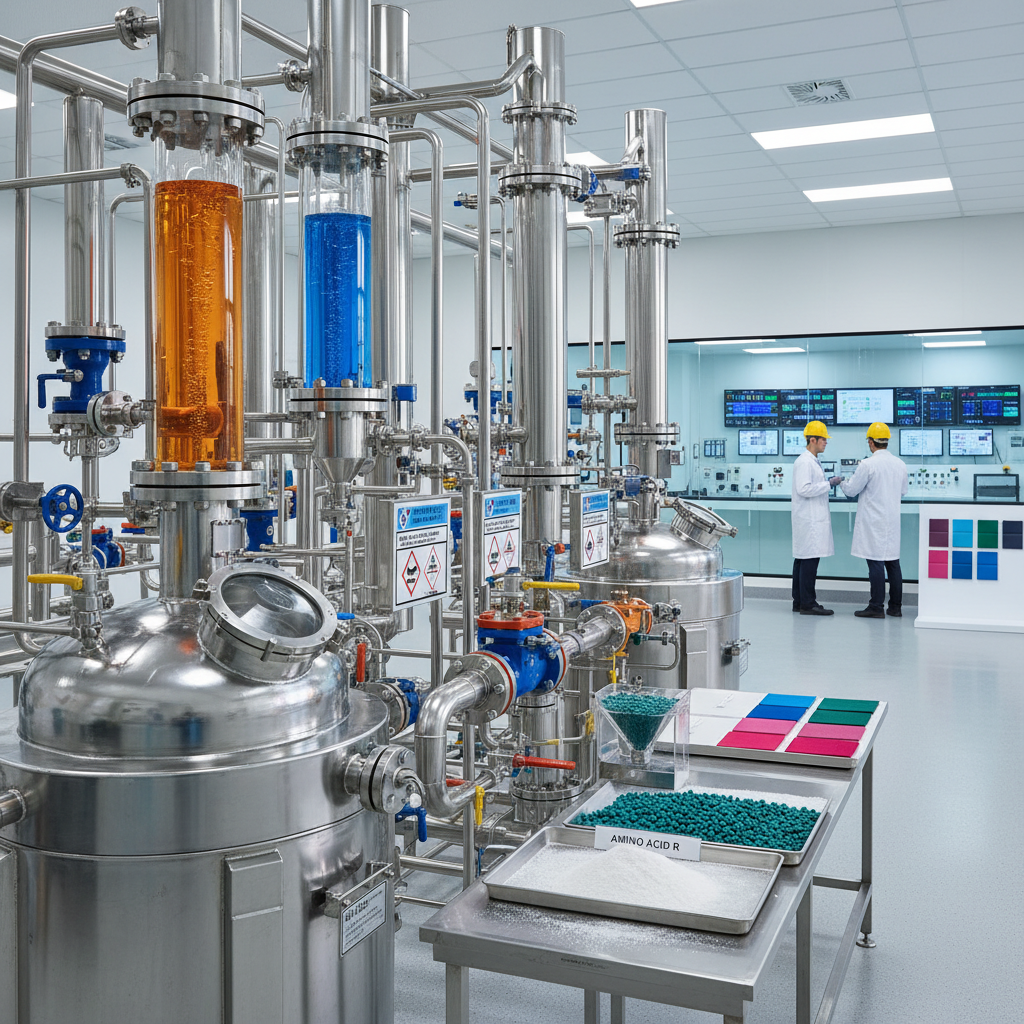
The global demand for high-performance nutritional additives has led to a surge in the adoption of specialized amino acid solutions. In the competitive landscape of modern livestock and aquaculture, achieving optimal growth and disease resistance requires more than basic nutrition; it necessitates the integration of precision-engineered compounds. This is where the concept of perfect health amino acids becomes pivotal, offering a scientific approach to metabolic optimization and structural integrity across various species.
From the poultry industry to high-density shrimp farming, the challenge remains the same: how to reduce mortality rates and improve feed conversion ratios (FCR) while maintaining strict regulatory compliance. The volatility of raw material costs and the prevalence of mycotoxins in feed pose significant risks to animal welfare and producer profitability. Addressing these challenges requires a multifunctional additive that can act as both a nutrient and a protective agent.
By utilizing L-Cysteine Hydrochloride Monohydrate, producers can implement a strategy focused on perfect health amino acids to enhance glutathione synthesis and detoxify heavy metals. This comprehensive approach not only secures the biological health of the animal but also ensures the superior quality of the final animal product, creating a sustainable value chain from feed to fork.
Global Relevance of Perfect Health Amino Acids
In the contemporary agricultural sector, the pursuit of "perfect health" is no longer just about the absence of disease but the maximization of biological potential. The integration of specialized amino acids into feed formulations has become a global standard for producers aiming to meet the stringent requirements of the EU No 68/2013 and China's GB standards. By focusing on the precise delivery of sulfur-containing amino acids, producers can significantly mitigate the biological stress induced by high-density farming environments.
The global relevance of these additives is further highlighted by the need to reduce reliance on traditional antibiotics. By utilizing L-Cysteine Hydrochloride Monohydrate, the industry can boost innate immunity and intestinal barrier function, ensuring that livestock remain resilient against common pathogens while maintaining a growth trajectory that maximizes return on investment.
Defining the Mechanism of Action
Perfect health amino acids are defined by their ability to serve as precursors for critical antioxidants, most notably glutathione (GSH). In the context of L-Cysteine Hydrochloride Monohydrate, the molecule provides the essential sulfhydryl group (-SH) necessary for the synthesis of GSH within the hepatocytes and intestinal mucosa. This biochemical pathway is the primary defense mechanism against oxidative stress and lipid peroxidation in animals.
Beyond simple nutrition, these amino acids function as metabolic regulators. In aquatic species, for instance, they facilitate the synthesis of chitin, which is essential for the molting process in crustaceans. This ensures that the transition between shell stages is synchronized and rapid, reducing the window of vulnerability to predators and opportunistic infections.
Furthermore, the "perfect health" aspect refers to the synergy between these amino acids and other nutrients. When combined with methionine or specific vaccines, they act as adjuvants that elevate antibody titers and promote the formation of a robust calcification matrix in eggshells, directly impacting the commercial viability of layer poultry operations.
Core Components for Growth Performance
The efficacy of perfect health amino acids in promoting growth is primarily rooted in the enhancement of nutrient absorption. By optimizing the health of the intestinal mucosa, these additives ensure that the animal can derive maximum value from every kilogram of feed consumed, which is critical in large-scale broiler operations.
Experimental data reveals that a 0.1% dietary inclusion of these specialized amino acids can increase the average daily gain (ADG) of broilers by 8.5%. This improvement is accompanied by a reduction in the feed conversion ratio (FCR) by 0.15, demonstrating that perfect health amino acids effectively translate nutritional input into muscle mass.
In addition to growth, structural integrity is a core component of this nutritional strategy. For layers, the sulfur source provided by these amino acids promotes a thicker eggshell (increasing thickness by 10-12μm), which drastically lowers the breakage rate by 18%, preserving the quality of the final product for the market.
Applications in Poultry and Aquatic Species
The application of perfect health amino acids varies significantly between terrestrial and aquatic environments to address specific biological stressors. In broiler chickens, the primary goal is the reduction of ascites mortality, where a 0.1% inclusion rate has been shown to reduce mortality by 22%, ensuring a higher survival rate throughout the 42-day growth cycle.
In the aquaculture sector, the focus shifts toward molting regulation and oxidative stress management. For Pacific white shrimp, a 0.05% supplementation improves molting synchronization by 30% and accelerates shell hardening by 1.2 days, while in fish, it reduces hepatic malondialdehyde (MDA) levels by 35%, protecting the liver from the stresses of high-density farming.
Performance Metrics of Perfect Health Amino Acids
Immunity and Disease Resistance Strategies
One of the most critical roles of perfect health amino acids is the fortification of the gut barrier. By activating the Nrf2 pathway, L-Cysteine Hydrochloride Monohydrate enhances the secretion of mucin MUC2, which creates a physical shield against pathogens. In challenge trials, this has resulted in a 22% reduction in coli-infection rates among broilers.
Furthermore, these amino acids exert a potent anti-inflammatory effect by suppressing NF-κB signaling. This molecular action decreases the expression of intestinal IL-6 by 40%, preventing systemic inflammation and allowing the animal to divert more energy toward growth rather than immune defense. When used as a vaccine adjuvant, they can elevate antibody titers by 2-3 logs, providing long-term protection against Newcastle-IBD.
Detoxification and Heavy Metal Antagonism
The chemical structure of perfect health amino acids, specifically the presence of sulfhydryl groups (-SH), makes them exceptionally effective at neutralizing environmental toxins. Aflatoxin B1 (AFB1), a common and dangerous mycotoxin in feed, is bound directly by these groups, which can reduce liver residues by up to 55% according to HPLC-MS validation.
In addition to mycotoxins, these additives act as chelating agents for heavy metals. In duck diets, a 0.1% addition of these amino acids has been shown to decrease hepatic lead content by 42%. This sequestering action prevents heavy metals from interfering with cellular enzymes, thereby protecting the animal's metabolic health.
This dual-action detoxification ensures that livestock can thrive even in regions where feed quality may be inconsistent. By neutralizing both organic toxins and inorganic metals, perfect health amino acids provide a safety net that protects the health of the animal and the safety of the human food supply.
Technical Guidelines and Cost-Benefit Analysis
To achieve the promised results, strict adherence to technical guidelines is necessary. For poultry, a dosage of 0.05-0.1% is recommended, while aquatic species require 0.03-0.08%. It is imperative to avoid direct mixing with oxidizers such as CuSO₄ to prevent degradation, and products should be stored in light-protected, sealed environments with water activity (aW) ≤ 0.3.
The economic justification for implementing perfect health amino acids is clear. In broiler farms, although feed costs may increase by ¥30-50 per ton, the resulting reduction in mortality (2-3%) can yield an annual profit increase of over ¥50k per 10k birds. This demonstrates a high ROI based on survival and growth efficiency.
For aquafeed mills, these amino acids can partially replace methionine (0.05% cysteine ≈ 0.03% methionine equivalent), potentially saving ¥80-120 per ton of formula cost. This combination of increased productivity and cost optimization makes these additives an essential tool for modern agricultural enterprises.
Comparative Analysis of Perfect Health Amino Acids Applications
| Target Species |
Recommended Dosage |
Primary Benefit |
Economic Impact |
| Broilers |
0.05% - 0.1% |
-22% Ascites Mortality |
+¥50k/10k birds profit |
| Layers |
0.08% |
+12μm Shell Thickness |
-18% Breakage Rate |
| White Shrimp |
0.05% |
+30% Molting Sync |
Faster Harvest Cycle |
| Fish/Trout |
0.03% - 0.08% |
-35% Hepatic MDA |
Higher Survival in Density |
| Ducks |
0.1% |
-42% Hepatic Lead |
Reduced Toxico-Losses |
| Aquafeed Mix |
0.05% |
Methionine Replacement |
Save ¥80-120/ton feed |
FAQS
They act as a critical sulfur source for methionine, which promotes the formation of the calcification matrix. Experimental data shows that a 0.08% addition in layer diets can increase eggshell thickness by 10-12μm, thereby reducing the breakage rate by approximately 18%.
Yes, to a certain extent. In aquafeed formulations, a 0.05% inclusion of L-Cysteine is roughly equivalent to 0.03% methionine. This replacement can lead to a cost saving of ¥80-120 per ton of feed without compromising animal performance.
They facilitate the synthesis of chitin, which is essential for the molting process. A 0.05% supplementation in Pacific white shrimp feed has been shown to improve molting synchronization by 30% and accelerate the shell hardening process by 1.2 days.
The sulfhydryl (-SH) groups in the amino acids directly bind to Aflatoxin B1 (AFB1) epoxides. This binding process neutralizes the toxin and reduces liver residues by up to 55%, protecting the liver from mycotoxin-induced damage.
Yes, you must avoid direct mixing with strong oxidizers, such as Copper Sulfate (CuSO₄), as these can oxidize the sulfhydryl groups and reduce the efficacy of the additive. Proper premix homogeneity (CV ≤5%) is also recommended.
Absolutely. In pork, a 0.05% addition in finisher diets reduces drip loss by 20%, improving water-holding capacity. In chicken, it increases inosine monophosphate (IMP) content by 15%, which significantly enhances the umami taste of the meat.
Conclusion
The implementation of perfect health amino acids represents a sophisticated shift toward precision nutrition in the livestock and aquaculture industries. By integrating L-Cysteine Hydrochloride Monohydrate, producers can simultaneously address growth efficiency, immune resilience, and toxin detoxification. The data-backed results—ranging from reduced broiler mortality to improved shrimp molting and enhanced meat quality—underscore the versatility and necessity of these compounds in modern agriculture.
Looking forward, the industry must continue to move away from prophylactic antibiotic use toward bioactive nutritional supports. We suggest that producers conduct site-specific trials to optimize dosage for their particular animal species and environment. Embracing these scientific advancements will not only ensure animal welfare and food safety but also drive the economic sustainability of the global protein supply chain. Visit our website: www.hbfuyangbio.com