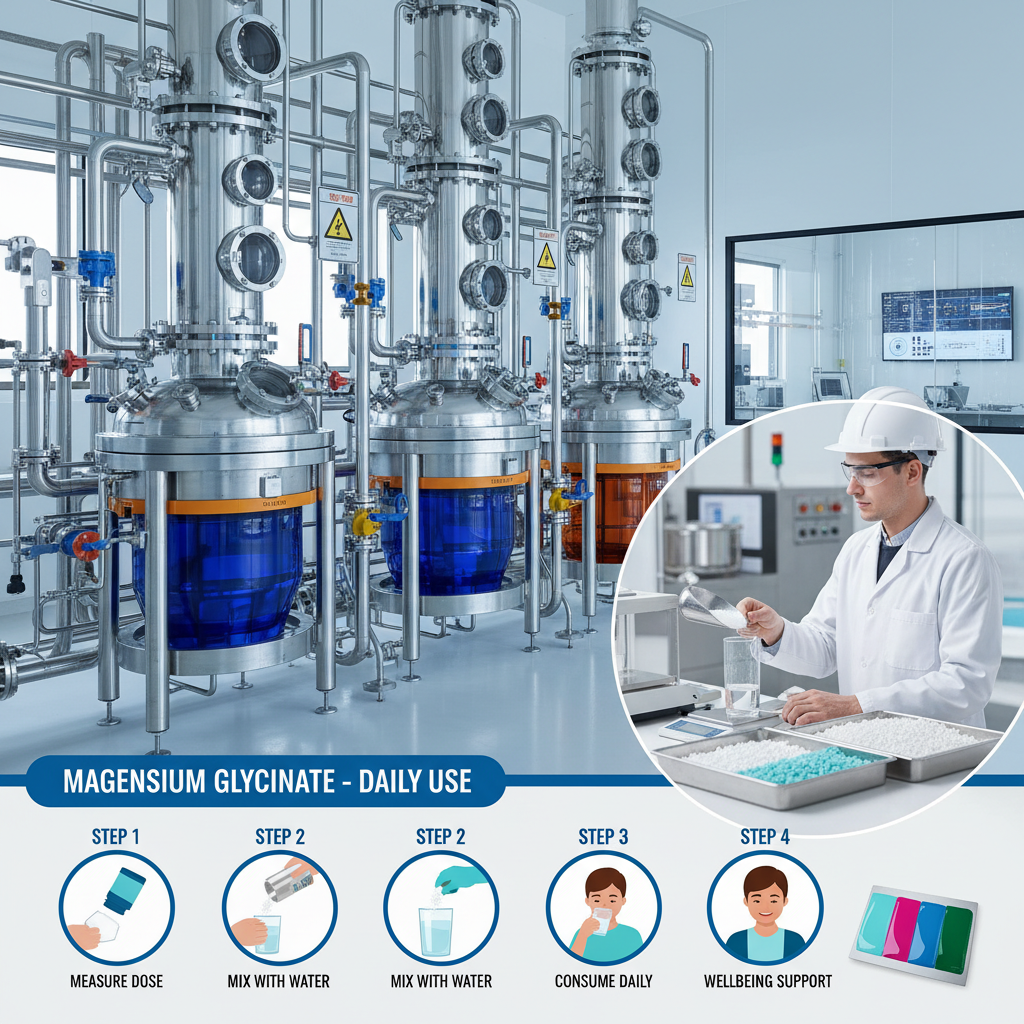
Why Zinc Glycinate Matters in Industrial Applications
Over my years working with industrial minerals and supplements, glycinate de zinc has quietly become a favorite ingredient among engineers and product formulators alike. It’s one of those ingredients that doesn’t hit the headlines but shows up everywhere behind the curtain, improving product quality and consistency where zinc content is crucial.
Honestly, I was skeptical at first about the buzz surrounding zinc glycinate — isn’t zinc just zinc? But it turns out, the form zinc takes really matters, especially in industrial processes where absorption, stability, and reactivity can make or break a product’s performance.
Understanding Zinc Glycinate’s Role and Advantages
Zinc glycinate is essentially zinc chelated (bonded) with glycine amino acids. This chelation boosts zinc’s bioavailability, meaning it’s easier to utilize in applications ranging from nutritional supplements to agricultural fortification and some specialty industrial manufacturing. It’s less prone to interact negatively with other compounds, making formulations simpler and more stable.
One interesting tidbit: several plant nutrition engineers swear it’s the form that plants uptake most efficiently. In fact, I once visited a farm where the switch to zinc glycinate fertilizers led to visibly greener and more robust crops within one growing season. It’s something you can actually see, which in my line of work, counts for a lot.
Key Product Specifications of Zinc Glycinate
| Specification | Typical Value | Notes |
|---|---|---|
| Zinc Content | 20% (w/w) | High purity zinc source |
| Chelation Ratio | 1:2 (Zinc:Glycine) | Stable complex for absorption |
| Appearance | White to off-white powder | Free-flowing and easy to handle |
| Solubility | Water soluble (at 20-25 °C) | Ensures uniform distribution in blends |
| pH Range | 4.5 - 5.5 | Suitable for most aqueous systems |
Choosing the Right Supplier for Zinc Glycinate
From my experience, not all zinc glycinate products are created equal. It’s a bit like coffee brands — sure, they all say “coffee,” but the flavor, roast, and quality vary wildly. With mineral chelates, purity, consistent chelation, and particle size matter a lot, especially when scaled to industrial volumes.
Here’s a quick vendor comparison I put together based on typical criteria industry folks tend to look for:
| Vendor | Zinc Purity (%) | Chelation Stability | Particle Size | Pricing | Lead Time (days) |
|---|---|---|---|---|---|
| HB Fuyang Bio | 20.1% | High (Strong, consistent) | Fine (under 100 mesh) | Competitive | 7–10 |
| Competitor A | 19.5% | Medium (Variable batch to batch) | Coarse (under 60 mesh) | Above average | 14–18 |
| Competitor B | 20.0% | High | Medium (80 mesh) | Premium | 10–12 |
What this all means for you is pretty straightforward — if you prioritize quality and consistent performance, some suppliers will serve you better than others. A few dollars saved on bulk orders can soon turn into headaches if the composition isn’t consistent or the particle size causes mixing issues.
Oddly enough, I noticed many engineers overlook the shipping and lead time aspect until the last minute. It’s one of those “we’ll cross that bridge when we come to it” moments that often causes project delays. An experienced supplier with clear delivery expectations will spare you a lot of stress.
Final Thoughts on Choosing Zinc Glycinate
Frankly, sourcing zinc glycinate feels like more art than science sometimes, especially when you consider how it fits into complex systems — from feed additives to fertilizers, and even industrial catalysts. You want the purity and quality, sure, but you also want a supplier who knows their stuff and moves fast.
That’s why I’ve come to recommend products like those from here: consistent specs, reliable delivery, and good value. It’s all about working with partners who understand the nitty-gritty — the stuff you only appreciate after getting your hands dirty.
Anyway, if you’re involved in any application requiring zinc, I suggest digging a little deeper into glycinate de zinc. It could be the ingredient that quietly pushes your product’s performance just that bit further.
References and musings:
- Field notes from industrial mineral sourcing visits (2018–2023)
- Discussions with agricultural product formulation engineers
- Technical datasheets and third-party analysis reports on zinc amino acid chelates