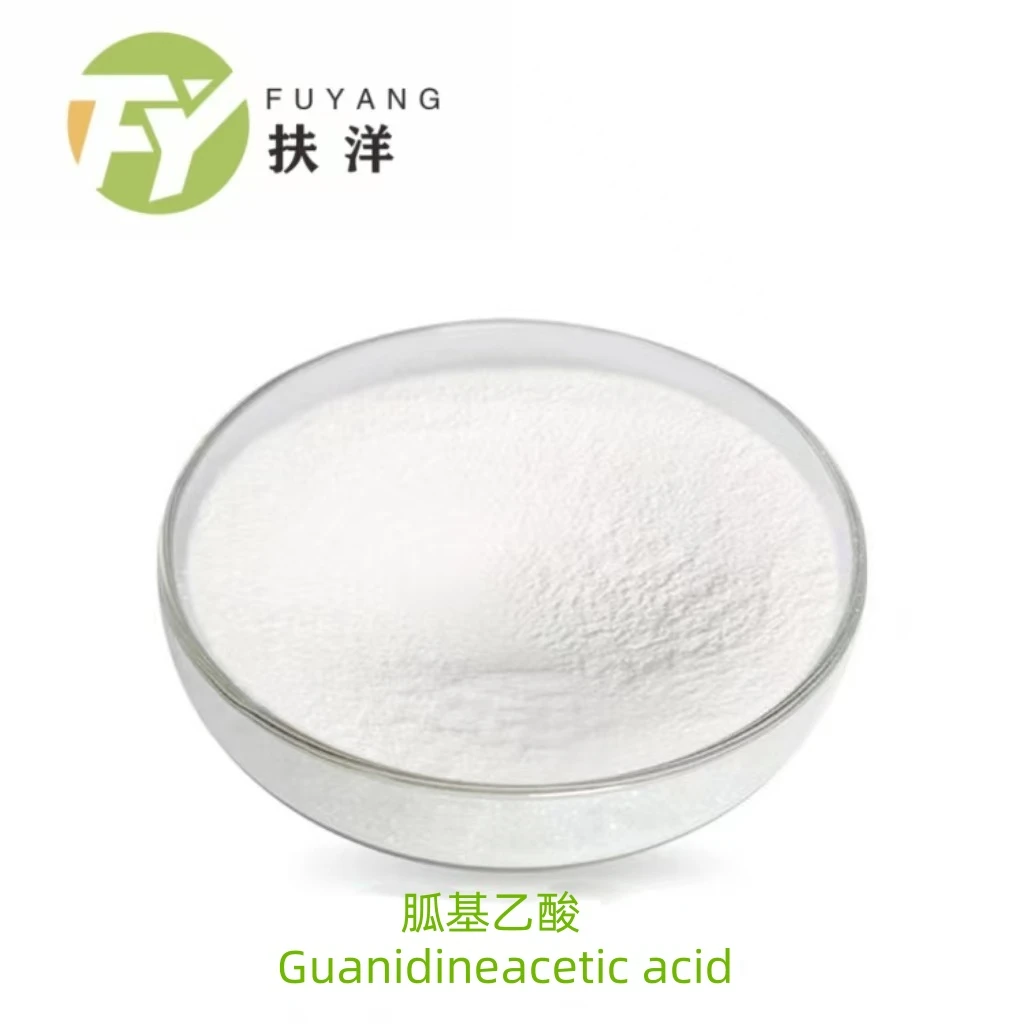
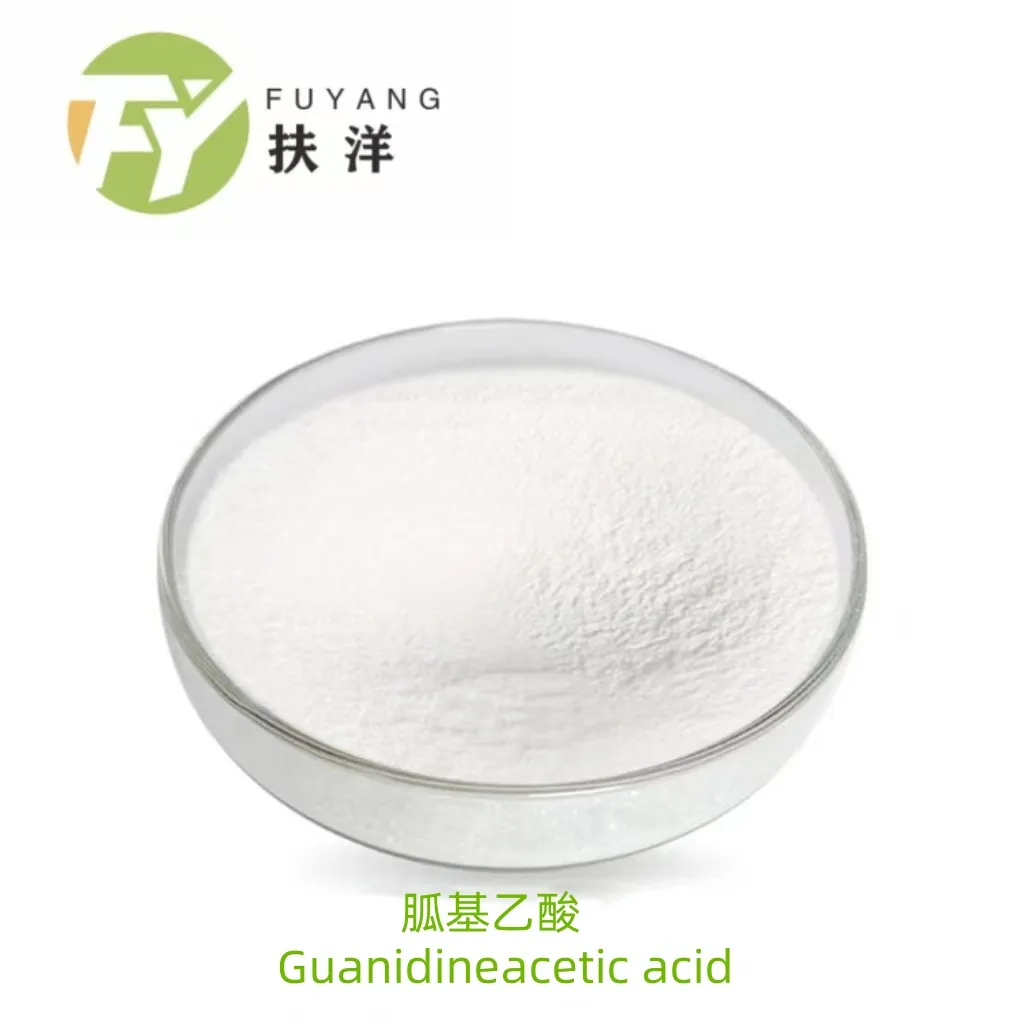
Guanidineacetic Acid (GAA) is a high-efficiency biological precursor essential for the synthesis of phosphocreatine, playing a pivotal role in cellular energy metabolism. Designed specifically for the animal nutrition industry, this premium additive optimizes energy allocation toward muscle tissue synthesis, significantly accelerating growth rates and enhancing overall lean meat production across various livestock species.
By improving nutrient absorption and feed utilization, Guanidineacetic Acid helps producers reduce waste and maximize the genetic potential of their herds. Whether applied in commercial swine, poultry, or aquaculture, this compound ensures superior body composition and improved reproductive performance, making it an indispensable asset for modern precision farming and biochemical research.
Detailed Parameters
| Product Name | Guanidineacetic Acid | CAS No. | 352-97-6 |
|---|---|---|---|
| Molecular Formula | C3H7N3O2 | Molecular Weight | 117.11 |
| EINECS NO. | 206-529-5 | Packing | 25kg/bag or 500kg/ton bag |
| Main Application | Animal Feed Additive | Target Species | Swine, Poultry, Cattle, Fish, Shrimp |
| Function | Growth Promotion | Secondary Use | Biochemical Research |
Key Advantages
Muscle Synthesis
Directs energy toward muscle tissue synthesis, significantly improving lean meat percentage and body shape.
Rapid Growth
Accelerates growth rates in aquatic species (fish and shrimp) by up to 41% for faster turnover.
Reproductive Boost
Provides vital energy to reproductive glands, increasing sperm count and motility in breeding swine.
Feed Efficiency
Optimizes nutritional value and minimizes feed waste by improving the utilization rate of nutrients.
Body Composition
Promotes broader backs and firmer hindquarters in lean-meat pigs through phosphocreatine synthesis.
Versatile Application
Effective across a wide range of animals, from commercial layers to special mink and rabbit breeding.
Product Gallery
Management Platforms
Logistics Control
Optimized 25kg and 500kg packaging options for seamless supply chain integration.
Dosage Precision
Tailored dosage guidelines ranging from 300g to 600g per ton based on species.
Quality Assurance
Strict adherence to chemical purity standards for safe integration into commercial feed.
Research Support
High-grade purity suitable for biochemical research and experimental reagents.
Species Targeting
Specialized formulations for ruminants, poultry, and high-value economic animals.
Market Compliance
Developed to meet international standards for feed additives and biochemical products.
Investment Return Comparison
| Animal Species | Standard Feed Result | GAA Optimized Result |
|---|---|---|
| Aquaculture | Baseline Growth | +41% Growth Rate |
| Lean-Meat Pigs | Average Body Shape | Superior Muscle Firmness |
| Breeding Swine | Standard Fertility | Enhanced Sperm Motility |
| Poultry/Broilers | Regular FCR | Improved Feed Efficiency |
| Beef Cattle | Standard Weight Gain | Accelerated Muscle Mass |
Frequently Asked Questions
It acts as a precursor to phosphocreatine, which optimizes energy allocation toward muscle synthesis, promoting faster weight gain and better body composition.
Guanidineacetic acid is highly effective in aquatic species, with documented increases in growth rates by as much as 41%.
For piglets, the recommended dosage is 500–600 g/ton; for growing-finishing pigs, it is 400–500 g/ton.
Yes, it is particularly beneficial for breeding swine, as it provides energy to reproductive glands, increasing sperm count and motility.
Yes, it is applied in special economic animal breeding, including meat rabbits and minks.
Yes, it is utilized in biochemical research as an experimental reagent, although its primary commercial volume is in animal nutrition.