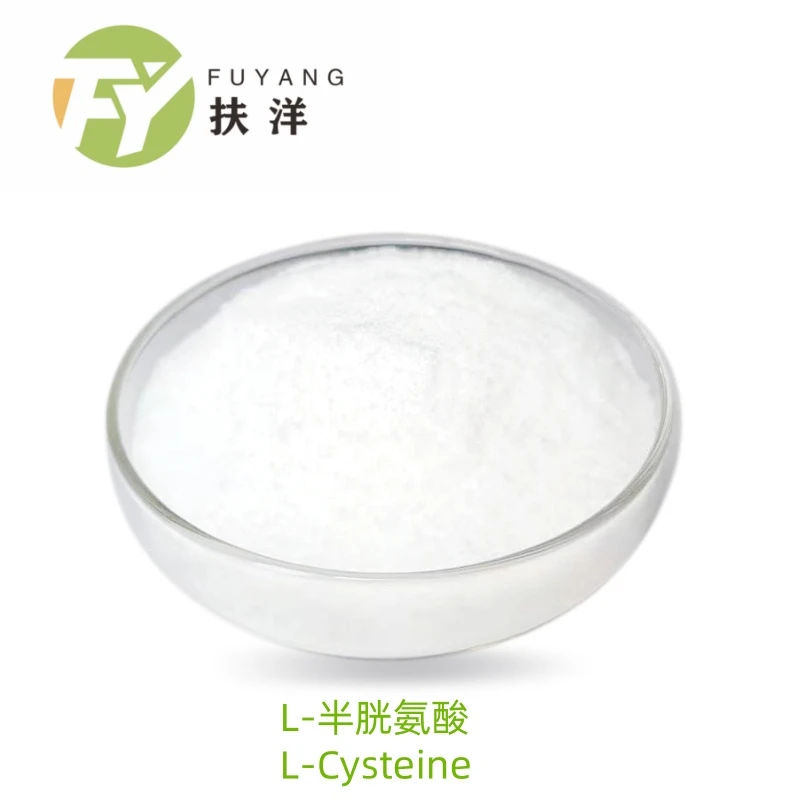
L-Cysteine Hydrochloride Monohydrate is a high-purity sulfur-containing amino acid derivative engineered for versatile industrial applications. By leveraging its powerful sulfhydryl groups (-SH), it serves as a critical precursor for glutathione (GSH) synthesis and a potent reducing agent, making it indispensable across the food, pharmaceutical, cosmetic, and animal nutrition sectors.
Our premium grade L-Cysteine Hydrochloride Monohydrate is optimized for maximum stability and efficacy. From enhancing the structural integrity of baked goods and accelerating liver repair in clinical settings to optimizing growth performance and immunity in livestock and aquaculture, this multifunctional additive delivers scientifically validated results that drive commercial productivity and product quality.
Detailed Parameters
| Purity Level | ≥ 99.5% (ChP 2020 Compliant) | Storage Stability | 24 Months at 40°C/75% RH |
|---|---|---|---|
| Regulatory Status | EU No 68/2013 (Reg. No. E920) | Heavy Metal Pb | ≤ 2 ppm (GB 7300.901-2019) |
| Heavy Metal As | ≤ 1 ppm (GB 7300.901-2019) | Tyrosinase IC50 | 2.3 mM (Whitening efficacy) |
| Poultry Dosage | 0.05% - 0.1% in dietary inclusion | Aquatic Dosage | 0.03% - 0.08% in feed formulation |
| Water Activity | aW ≤ 0.3 (Optimized storage) | Packaging | Light-protected, sealed containers |
Key Advantages
Immune & Gut Health
Activates Nrf2 pathway to enhance MUC2 secretion, reducing coli-infection rates by 22% in broiler trials.
Growth Acceleration
Increases broiler average daily gain (ADG) by 8.5% and optimizes Feed Conversion Ratio (FCR) by 0.15.
Detoxification Power
Directly binds Aflatoxin B1 epoxides, reducing liver residues by 55% via -SH group chelation.
Product Quality
Enhances pork water-holding capacity (20% drip loss reduction) and increases eggshell thickness by 8-12μm.
Skin & Hair Care
Increases hair breakage resistance from 0.8N to 1.2N and provides superior tyrosinase inhibition for brightening.
Global Compliance
Fully compliant with GB standards and EU regulations for all animal life stages and pharmaceutical use.
Product Gallery
Management Platforms
Quality Control
Strict adherence to ChP 2020 and GB standards ensuring purity ≥ 99.5%.
Process Optimization
Advanced synthesis minimizing impurities for pharmaceutical and food grade applications.
Stability Monitoring
Accelerated stability testing at 40°C/75% RH to ensure 24-month shelf life.
Regulatory Support
Complete documentation for EU No 68/2013 and China GB regulatory compliance.
Logistical Security
Light-protected and sealed packaging to prevent oxidation of sulfhydryl groups.
Technical Customization
Tailored solutions for ruminants, pet feed, and high-end cosmetic formulations.
Investment Return Comparison
| Application Sector | Input Cost Increase | Measurable ROI/Benefit |
|---|---|---|
| Broiler Farms | ¥30-50 / ton feed | Mortality ↓ 2-3%, Profit > ¥50k/10k birds |
| Aquafeed Mills | Partial Methionine Replace | Cost Saving ¥80-120 / ton formula |
| Bakery Industry | 0.05% Inclusion | Bread Specific Volume ↑ 12-18% |
| Shrimp Farming | 0.05% Supplementation | Molting Sync ↑ 30%, Shell Hardening ↑ 1.2 days |
| Cosmetic OEM | 2% Formulation | Hair Breakage Resistance ↑ 50% (0.8N to 1.2N) |
Frequently Asked Questions
It acts as a vital sulfur source for methionine, promoting the formation of the calcification matrix. Experimental data shows an increase in eggshell thickness by 10-12μm and a reduction in breakage rate by 18%.
Yes. The -SH groups in the molecule directly bind to Aflatoxin B1 (AFB1) epoxides, which has been shown to reduce liver residues by up to 55% based on HPLC-MS validation.
To maintain stability, avoid direct mixing with strong oxidizers, such as Copper Sulfate (CuSO₄). We recommend utilizing premix homogeneity with a CV ≤ 5%.
It reduces disulfide bonds in gluten via its sulfhydryl groups, enhancing dough elasticity and increasing the specific volume of bread by 12-18% compared to GB/T 20981 standards.
It inhibits tyrosinase activity with an IC50 of 2.3mM (more potent than arbutin's 4.1mM), effectively reducing melanin production while remaining compliant with safety regulations.
Absolutely. It is used in fish and shrimp feed to regulate molting cycles and reduce hepatic malondialdehyde (MDA) by 35%, lowering oxidative stress in high-density farming.