In the evolving landscape of global agriculture and animal husbandry, the demand for precision nutrition has never been higher. The integration of amino c represents a critical shift toward optimizing metabolic efficiency and enhancing the biological value of feed and fertilizers. By providing the essential building blocks for protein synthesis, these specialized amino acid complexes ensure that livestock and crops can reach their full genetic potential despite environmental stressors.
The global market for feed additives is currently grappling with the volatility of raw material costs and the urgent need for sustainable intensification. Implementing amino c allows producers to reduce reliance on expensive protein sources while simultaneously decreasing the nitrogen excretion associated with overfeeding. This balance is not just an economic advantage but a fundamental requirement for meeting international environmental standards and ISO guidelines for sustainable production.
Understanding the chemical synergy and application methods of amino c is essential for professionals in the chemical and agricultural sectors. Whether used to boost the immunity of breeding stock or to stimulate root development in depleted soils, the strategic use of these compounds bridges the gap between traditional farming and high-tech bio-chemical interventions, ensuring food security for a growing global population.
Global Relevance of amino c in Bio-Chemistry
The global relevance of amino c is rooted in the urgent need to optimize nutrient absorption in livestock and crops. As the world population climbs toward 9 billion, the pressure on the chemical raw materials industry to provide high-purity additives has intensified. Data from agricultural reports suggest that precision amino acid supplementation can reduce waste by up to 20%, making it a cornerstone of modern sustainable farming.
Beyond simple growth promotion, amino c serves as a critical tool in mitigating the effects of climate change on agriculture. By enhancing the stress tolerance of plants and animals, these bio-chemical agents ensure stable yields in regions plagued by erratic weather patterns, thereby stabilizing global food supply chains and reducing economic volatility in emerging markets.
Technical Definition and Chemical Meaning
At its core, amino c refers to a specialized complex of amino acids designed for high bioavailability and targeted delivery. Unlike raw protein sources, which must be broken down by the organism through energy-intensive processes, amino c provides the nitrogenous compounds in a form that is immediately ready for assimilation into cellular structures.
In the context of modern industry, this means a transition from "bulk feeding" to "molecular nutrition." The chemical formulation of amino c is engineered to maintain stability during the pelleting process in feed mills or the mixing process in fertilizer production, ensuring that the active components reach the target organism without degradation.
This molecular precision addresses a humanitarian need: the eradication of malnutrition and the improvement of food quality. By ensuring that the essential amino acids—those that the body or plant cannot synthesize on its own—are present in the correct ratios, amino c elevates the nutritional profile of the final food product, benefiting human health and animal welfare globally.
Core Components of amino c Efficacy
The effectiveness of amino c is primarily driven by its purity and the balance of its amino acid profile. High-grade manufacturing processes ensure that the absence of contaminants allows for seamless integration into biological systems, maximizing the protein synthesis rate in muscle tissues or leaf structures.
Another critical factor is the solubility and absorption rate of amino c. By utilizing advanced chelation or micronization techniques, the industry has created versions that can penetrate plant cuticles or survive the acidic environment of the stomach, ensuring that the nutrient is delivered exactly where it is needed most.
Lastly, the synergy between amino c and other micronutrients cannot be overlooked. When paired with vitamins and minerals, these amino acids act as carriers, facilitating the transport of essential elements across cell membranes, which significantly enhances the overall metabolic vigor of the organism.
Performance Metrics and Scalability
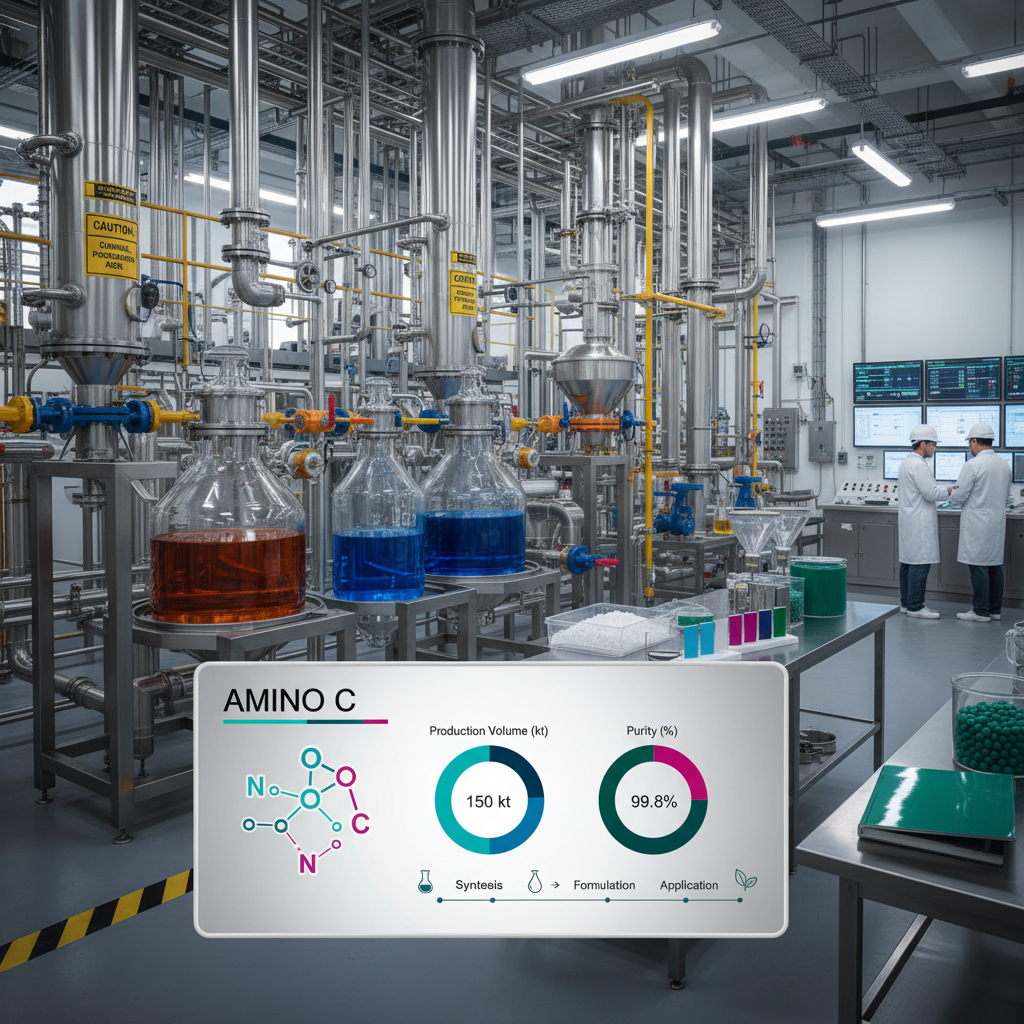
When assessing the impact of amino c, industry experts focus on scalability and cost-efficiency. The transition from lab-scale synthesis to industrial-grade production requires a delicate balance of purity and price. Modern facilities now utilize automated fermentation and purification systems to maintain consistent quality across metric tons of output, ensuring that large-scale agricultural operations can implement these solutions without prohibitive costs.
From a performance standpoint, the integration of amino c is measured by the "Feed Conversion Ratio" (FCR) in livestock or the "Yield Increase Per Hectare" in crops. By optimizing these metrics, producers can achieve higher outputs with fewer inputs, directly contributing to the economic viability of the chemical additive market.
Comparative Performance Analysis of amino c Variants
Global Applications across Agricultural Sectors
The versatility of amino c allows it to be deployed across diverse biological domains. In the livestock industry, particularly in swine and poultry breeding, it is used to accelerate muscle growth and improve immune response, reducing the need for antibiotic interventions. In remote industrial zones, such as the vast cattle ranches of Brazil or Australia, the stability of amino c ensures that nutrition is maintained even during long transport periods.
Similarly, in the realm of specialized fertilizers, amino c is applied as a foliar spray to help crops recover from frost or drought damage. In high-value horticulture, such as the vineyards of France or the greenhouses of the Netherlands, these compounds are used to enhance the organoleptic properties of fruits and vegetables, directly increasing the market value of the produce.
Long-Term Value and Sustainability Benefits
The long-term value of amino c extends far beyond immediate growth metrics; it is fundamentally about the sustainability of the ecosystem. By providing precise nutrition, amino c reduces the excretion of excess nitrogen into the groundwater, thereby mitigating the risk of eutrophication in nearby water bodies and protecting biodiversity.
From a logical and emotional perspective, the adoption of these bio-chemical solutions represents a commitment to "Ethical Farming." When animals are provided with the exact amino acids they need, their overall welfare improves—they exhibit less stress and higher vitality. This transparency in the production chain builds trust with the end consumer, who increasingly demands products that are produced with scientific integrity and compassion.
Furthermore, the cost-benefit analysis over a five-year period shows that the investment in high-quality amino c pays for itself through reduced veterinary costs and higher harvest yields. It is an investment in reliability, ensuring that the food chain remains resilient in the face of an unpredictable global climate.
Future Trends in amino c Innovation
The future of amino c is being shaped by the convergence of biotechnology and digital transformation. We are seeing the rise of "Smart Nutrition," where AI-driven sensors monitor the real-time nutrient needs of a herd or a field, triggering the precise dosage of amino c through automated delivery systems. This eliminates waste and maximizes biological response.
Moreover, the shift toward green chemistry is leading to the development of bio-based fermentation processes that produce amino c using carbon-neutral energy sources. This transition not only lowers the carbon footprint of the chemical industry but also aligns the product with the strict environmental regulations being implemented by the European Union and other global governing bodies.
Finally, the exploration of nano-encapsulation is set to revolutionize how amino c is delivered. By wrapping the amino acids in a biocompatible nano-shell, researchers can create "time-release" formulations that provide a steady stream of nutrition over several weeks, drastically reducing the frequency of application and labor costs for the farmer.
Strategic Analysis of amino c Implementation Dimensions
| Application Sector |
Key amino c Metric |
Efficiency Score (1-10) |
Long-term ROI |
| Poultry Breeding |
Weight Gain Rate |
9.2 |
High |
| Swine Nutrition |
Lean Meat Percentage |
8.8 |
Medium-High |
| Cereal Crops |
Chlorophyll Density |
7.5 |
Medium |
| Fruit Orchards |
Fruit Set Stability |
8.4 |
High |
| Aquaculture |
Survival Rate |
9.0 |
Very High |
| Organic Farming |
Soil Microbial Activity |
7.9 |
Medium-High |
FAQS
Standard protein additives are complex polymers that must be digested into amino acids before the body can use them, often resulting in nitrogen loss. amino c provides pre-digested, high-purity amino acids that are absorbed almost instantly, reducing metabolic energy expenditure and increasing overall efficiency.
Yes, amino c is formulated for versatility. It is available as highly soluble powders for liquid application (like foliar sprays) and as stable granules for dry feed mixing, ensuring that it remains active throughout the manufacturing and distribution process.
Depending on the production method (such as plant-based fermentation), many amino c variants are compatible with organic standards. We recommend checking the specific certification of the batch to ensure it meets the requirements of agencies like IFOAM or USDA Organic.
Dosage depends on the growth stage and current diet. Generally, amino c is used to fill the "ideal protein" gap. Professional nutritionists typically recommend a precise calculation based on the limiting amino acid of the base feed, often ranging from 0.1% to 0.5% of the total ration.
amino c acts as an osmoprotectant. By increasing the concentration of proline and other protective amino acids in the plant cells, it helps maintain turgor pressure and protects cellular membranes from collapsing during periods of extreme water scarcity.
Importing amino c involves adhering to local agricultural and chemical import laws. We provide all necessary MSDS, COA, and ISO documentation to facilitate smooth customs clearance and ensure that the product meets the regulatory health and safety standards of the destination country.
Conclusion
The implementation of amino c represents a pivotal advancement in the specialized chemical manufacturing sector, bridging the gap between basic nutrition and high-performance bio-chemistry. By optimizing nutrient bioavailability, reducing environmental waste, and enhancing the resilience of both livestock and crops, amino c provides a scalable solution to the complex challenges of global food security and sustainable agricultural intensification.
As we move toward an era of AI-driven agriculture and green chemistry, the role of precision additives will only grow in significance. Producers and distributors who embrace the scientific rigor and efficiency of amino c will not only realize higher profit margins but will also contribute to a more ethical and sustainable food system. To learn more about our specialized solutions, visit our website: www.hbfuyangbio.com