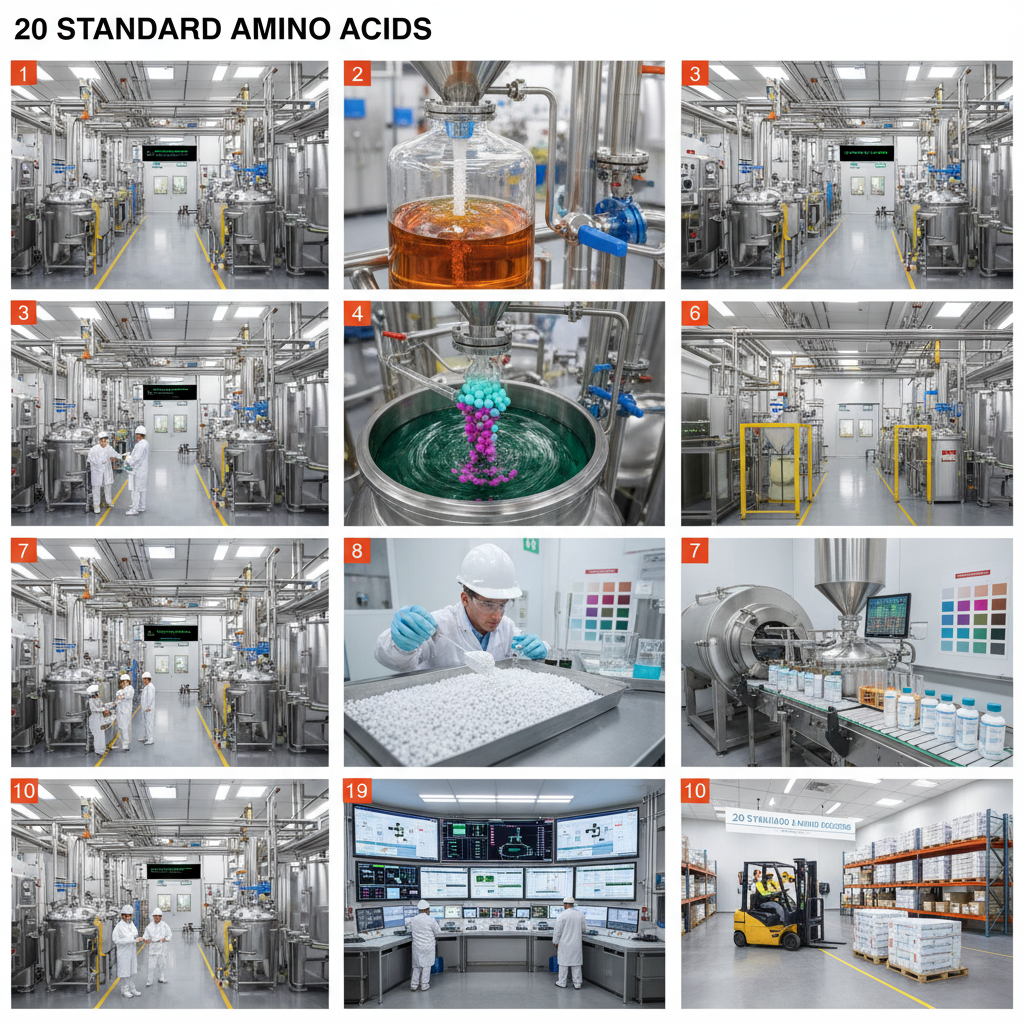
Amino acid weight, a critical parameter in feed formulation, agricultural practices, and even human nutrition, is gaining increasing prominence globally. The precision with which we understand and manage amino acid weight directly impacts animal health, crop yields, and the efficiency of food production systems. As the world population continues to grow, optimizing these factors becomes ever more crucial for ensuring food security and sustainable agricultural practices. The demand for high-quality feed additives, fueled by a rising global meat consumption, particularly in developing nations, underscores the vital role of accurate amino acid weight analysis.
Within the chemical manufacturing industry, specifically concerning feed additives, understanding amino acid weight isn’t merely a technical detail—it’s a cornerstone of quality control, product efficacy, and regulatory compliance. Manufacturers are under increasing pressure to provide transparent and verifiable data on the amino acid composition of their products. Errors in determining amino acid weight can lead to suboptimal animal performance, increased feed costs, and potential health issues. This necessitates robust analytical methodologies and a commitment to precision in production.
The significance of amino acid weight extends beyond economic considerations. It is intricately linked to environmental sustainability. Precise feed formulations based on accurate amino acid weight minimize nitrogen excretion from livestock, reducing the environmental impact of agricultural operations. This aligns with global initiatives promoting responsible farming practices and minimizing pollution.
The Global Significance of Amino Acid Weight
Amino acid weight, fundamentally determined by the molecular structure of each amino acid, dictates the precise composition of protein sources utilized in feed and fertilizer applications. This isn't a localized concern; globally, the Food and Agriculture Organization (FAO) estimates that over 1 billion people suffer from protein deficiency, highlighting the critical need for efficient protein production. Understanding amino acid weight allows for the creation of optimized feed formulations, maximizing protein synthesis in livestock and contributing to improved nutritional outcomes.
The United Nations Sustainable Development Goals (SDGs), particularly SDG 2 (Zero Hunger), are directly impacted by advancements in amino acid weight precision. Reduced feed waste, improved animal health, and increased crop yields – all facilitated by accurate amino acid analysis – contribute to a more sustainable and food-secure future. The ISO standards relating to feed analysis increasingly emphasize the importance of accurate amino acid profiling, further solidifying its global relevance.
Defining Amino Acid Weight
Amino acid weight refers to the molecular weight of individual amino acids, expressed in Daltons (Da) or grams per mole (g/mol). These weights vary significantly depending on the specific amino acid, ranging from approximately 75 Da for glycine to 146 Da for tryptophan. Accurately determining these weights is crucial for calculating the precise amino acid composition of a feed ingredient or fertilizer product. The importance goes beyond simple molecular calculations; it influences bioavailability and metabolic utilization.
In the context of modern industry, determining amino acid weight isn’t limited to theoretical calculations. Analytical techniques like High-Performance Liquid Chromatography (HPLC) with post-column derivatization are commonly employed to accurately quantify the amino acid content of samples. These methods provide precise data on amino acid weight percentages, enabling manufacturers to meet stringent quality control standards.
The connection to humanitarian needs lies in ensuring the nutritional adequacy of food sources, particularly in regions facing malnutrition. Precisely understanding the amino acid profile of crops and livestock feed allows for targeted supplementation, addressing specific deficiencies and improving overall health outcomes. Amino acid weight provides the foundation for building efficient and effective nutritional interventions.
Key Factors Influencing Amino Acid Weight
Several factors influence the perceived and actual amino acid weight in a given sample. First, the method of analysis significantly impacts accuracy. Different HPLC techniques, for instance, employ varying derivatization reagents, which can slightly alter the measured weight. Second, sample preparation is critical. Improper hydrolysis during sample preparation can lead to the degradation of certain amino acids, resulting in inaccurate weight determinations.
Third, the presence of interfering substances in the sample matrix can affect analytical readings. These substances may either enhance or suppress the signal, leading to erroneous amino acid weight assessments. Fourth, the source of the amino acid itself plays a role. Amino acids derived from fermentation processes may have slightly different isotopic compositions compared to those from chemical synthesis, potentially affecting weight measurements. Finally, moisture content must be accurately measured and accounted for as it directly impacts the concentration of amino acids.
The stability of amino acids during storage also affects accurate weight determination. Exposure to heat, light, or oxidizing agents can degrade amino acids, resulting in a lower measured weight. Proper storage conditions – cool, dark, and airtight containers – are essential for preserving sample integrity and ensuring reliable analytical results, ultimately impacting the reported amino acid weight.
Applications of Amino Acid Weight in Industry
Within the feed industry, amino acid weight is paramount in formulating balanced diets for livestock. Precise amino acid profiles ensure optimal growth, enhanced muscle development, and improved feed conversion ratios. This has direct economic benefits for farmers, reducing feed costs and increasing profitability. Supplementation with synthetic amino acids, guided by accurate weight assessments, allows for targeted nutritional adjustments.
In fertilizer production, amino acids act as biostimulants, promoting plant growth and enhancing nutrient uptake. The amino acid weight plays a critical role in determining the appropriate dosage and application method. Precise formulation ensures that plants receive the necessary amino acids for optimal development, leading to increased crop yields and improved quality.
Amino Acid Weight Optimization Methods
Global Applications & Use Cases
In regions facing widespread protein malnutrition, such as parts of Sub-Saharan Africa, accurately determining the amino acid weight of locally available food sources is crucial for developing effective supplementation programs. These programs often rely on fortified foods or targeted amino acid supplementation to address specific deficiencies, improving overall health and cognitive development.
In industrialized nations like the United States and those in the European Union, precision livestock farming heavily relies on accurate amino acid weight analysis. Large-scale poultry and swine operations utilize sophisticated feed formulation software that optimizes diets based on the precise amino acid requirements of different animal breeds and growth stages. This contributes to increased efficiency and reduced environmental impact.
Advantages and Long-Term Value
The advantages of prioritizing precise amino acid weight analysis are multifaceted. Economically, it leads to reduced feed costs, improved animal performance, and increased crop yields. Environmentally, it minimizes nitrogen excretion and promotes sustainable agricultural practices. From a social perspective, it contributes to improved nutrition, reduced malnutrition, and enhanced food security.
The long-term value lies in building resilient and sustainable food systems. By investing in accurate analytical technologies and promoting best practices in amino acid weight determination, we can ensure a more reliable and efficient food supply for future generations. This fosters trust between producers, consumers, and regulatory bodies, strengthening the integrity of the food chain.
Future Trends and Innovations
The future of amino acid weight analysis is poised for significant advancements. The integration of artificial intelligence (AI) and machine learning (ML) into analytical workflows promises to enhance accuracy and automate data interpretation. Furthermore, the development of more sensitive and rapid analytical techniques, such as isotope dilution mass spectrometry, will enable more precise measurements.
Digital transformation is also playing a crucial role. Cloud-based data platforms and remote monitoring systems are enabling real-time tracking of amino acid levels in feed and fertilizer, allowing for proactive adjustments and optimized formulations. Sustainability initiatives are driving the development of bio-based amino acid production methods, reducing reliance on fossil fuels and minimizing environmental impact.
Automation and robotics are streamlining sample preparation and analytical processes, increasing throughput and reducing human error. These innovations will lead to more efficient and cost-effective amino acid weight analysis, benefiting both producers and consumers.
Summary of Challenges and Potential Solutions Related to Accurate Amino Acid Weight Determination
| Challenge |
Impact on Amino Acid Weight |
Potential Solution |
Implementation Cost (1-10) |
| Inconsistent Sample Preparation |
Variable Hydrolysis Efficiency |
Standardized Protocols & Automated Systems |
7 |
| Matrix Interference |
Signal Suppression/Enhancement |
Advanced Sample Cleanup Techniques |
6 |
| Lack of Standardized Methods |
Poor Inter-laboratory Comparability |
Development & Adoption of ISO Standards |
8 |
| Analytical Instrument Calibration |
Systematic Errors in Measurement |
Regular Calibration with Certified Standards |
4 |
| Data Interpretation Complexity |
Subjectivity in Peak Identification |
AI/ML-Powered Data Analysis Tools |
9 |
| Cost of Advanced Technologies |
Limited Access for Smaller Companies |
Collaborative Analytical Services |
5 |
FAQS
Accurate amino acid weight is fundamental for formulating balanced feed rations. It ensures livestock receive the correct proportions of essential amino acids, maximizing growth, improving feed efficiency, and reducing nitrogen excretion. Inaccurate measurements can lead to suboptimal animal performance and increased production costs. The weight dictates the precise contribution each amino acid makes to the overall protein content.
Matrix effects refer to the interference caused by other components within the sample on the analysis of amino acids. These components can either suppress or enhance the signal, leading to inaccurate weight determination. Proper sample preparation techniques, such as cleanup and separation, are crucial for minimizing matrix effects and obtaining reliable results. Utilizing internal standards can also help correct for these variations.
High-Performance Liquid Chromatography (HPLC) with post-column derivatization is the most widely used technique for amino acid analysis. Other methods include gas chromatography-mass spectrometry (GC-MS) and ion-exchange chromatography. HPLC offers high sensitivity and accuracy, making it ideal for quantifying amino acid weight in complex matrices. Accurate calibration and quality control are vital, regardless of the chosen technique.
Amino acids are susceptible to degradation during storage if not handled properly. Exposure to heat, light, moisture, and oxidizing agents can lead to a loss of amino acids, resulting in inaccurate weight measurements. Samples should be stored in cool, dark, and airtight containers to minimize degradation and preserve their integrity. Proper documentation of storage conditions is also essential.
ISO standards provide internationally recognized protocols for amino acid analysis, ensuring consistency and comparability of results across different laboratories. Adherence to these standards minimizes variability and increases confidence in the accuracy of amino acid weight data. Implementing ISO-compliant methods helps build trust between manufacturers, regulators, and consumers.
AI and machine learning algorithms can be trained to analyze complex chromatographic data, identify peaks, and quantify amino acids with greater accuracy and efficiency. These technologies can also automate data interpretation, reducing subjectivity and minimizing human error. They can be used to predict amino acid weight based on spectral data, optimizing the analytical process.
Conclusion
In conclusion, amino acid weight is a foundational element of modern agriculture, animal nutrition, and food production. Precise determination of these weights is not merely a technical exercise but a critical factor in ensuring food security, promoting sustainability, and enhancing animal health. From optimizing feed formulations to developing innovative fertilizer solutions, understanding and managing amino acid weight drives efficiency and economic value.
Looking ahead, continued advancements in analytical technologies, coupled with the adoption of AI and data-driven approaches, will further refine our ability to assess and utilize amino acids effectively. We encourage you to explore our comprehensive range of amino acid products at www.hbfuyangbio.com and partner with us in building a more sustainable and nutritious future.