Total amino acids are the building blocks of proteins, essential for all life forms. Their importance extends across a wide range of industries, from human and animal nutrition to pharmaceutical development and agricultural practices. Understanding the composition and function of total amino acids is crucial for optimizing health, enhancing productivity, and driving innovation in various sectors globally.
The global market for amino acids is experiencing significant growth, driven by increasing demand for protein-rich diets, rising awareness of the benefits of amino acid supplementation, and advancements in biotechnology. According to recent reports, the amino acid market is projected to reach billions of dollars in the coming years, showcasing its economic significance. This growth necessitates a deeper understanding of total amino acids and their efficient production and application.
The study of total amino acids isn’t merely an academic pursuit; it directly addresses critical challenges like malnutrition, food security, and sustainable agriculture. Efficiently utilizing and producing total amino acids is paramount in meeting the growing demands of a global population and ensuring the well-being of both humans and animals. total amino acids play a pivotal role in these solutions.
Introduction: Global or Industry Context
The demand for total amino acids is directly linked to global population growth and the increasing consumption of protein-rich foods, especially in developing economies. The Food and Agriculture Organization of the United Nations (FAO) estimates that global meat consumption will continue to rise, driving the need for enhanced feed efficiency and optimized animal nutrition, both reliant on precise amino acid supplementation. This trend underscores the significance of total amino acids in ensuring food security.
The pharmaceutical industry represents another significant consumer of total amino acids, utilizing them in the production of intravenous solutions, nutritional supplements, and various therapeutic applications. The increasing prevalence of chronic diseases and the growing geriatric population are further fueling demand for these amino acid-based products. Global spending on pharmaceuticals continues to climb, reflecting the essential role of amino acids in healthcare.
However, the current production and distribution of total amino acids face challenges, including environmental concerns related to traditional fermentation processes and supply chain disruptions. The need for sustainable production methods and efficient logistics is paramount to address these issues and ensure a stable and reliable supply of essential amino acids to meet global needs. total amino acids are central to navigating these complexities.
Definition & Meaning
Total amino acids encompass all twenty standard amino acids, categorized as essential, non-essential, and conditional. Essential amino acids cannot be synthesized by the human body and must be obtained through diet, while non-essential amino acids can be produced internally. Conditional amino acids become essential during times of stress or illness. The ‘total’ refers to the sum of all these amino acid types present in a substance.
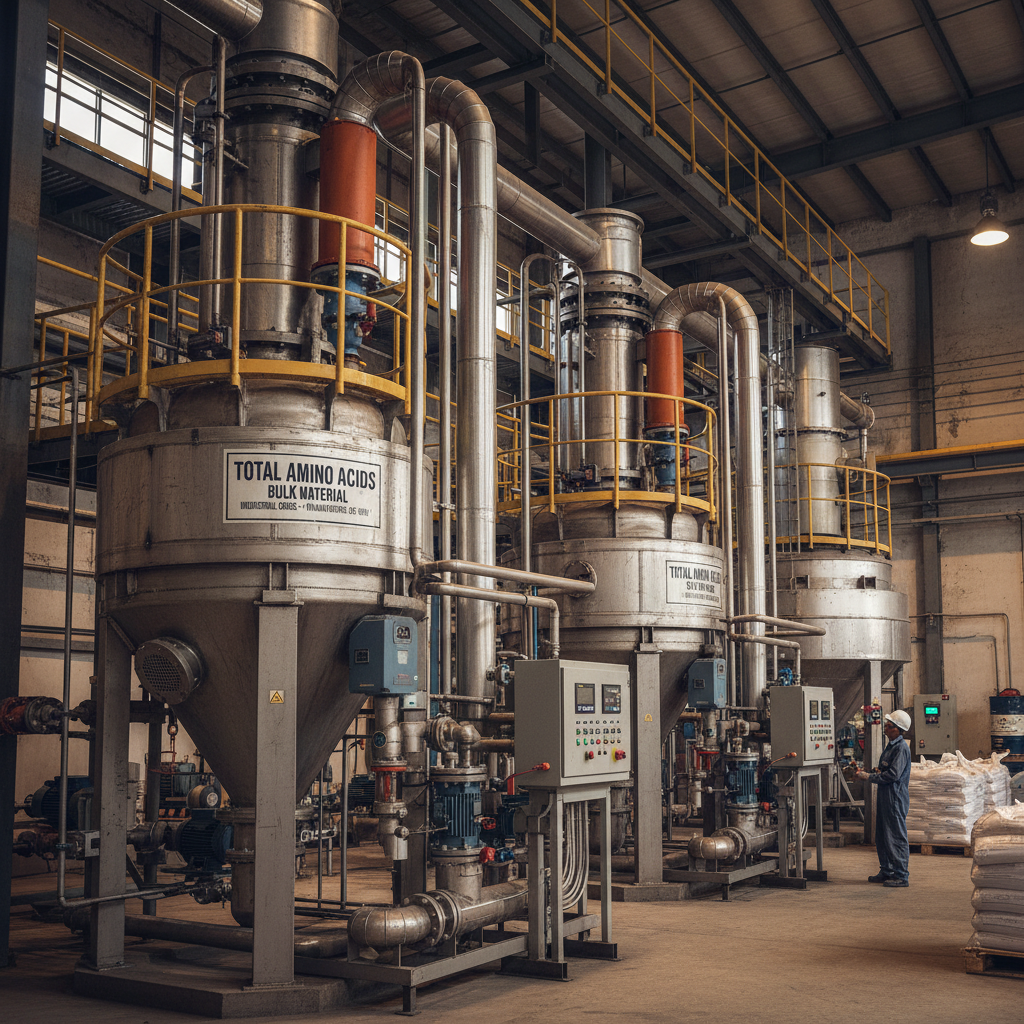
In modern industry, the precise quantification of total amino acids is critical for quality control and regulatory compliance in food, feed, and pharmaceutical products. Analytical techniques like high-performance liquid chromatography (HPLC) are routinely employed to determine the amino acid profile of various materials, ensuring they meet established standards and specifications. This is vital for building trust and guaranteeing product efficacy.
The connection to humanitarian needs lies in addressing malnutrition and supporting recovery from illness or injury. Total amino acids are integral components of specialized nutritional formulas designed for infants, critically ill patients, and individuals with specific dietary requirements. Providing access to these essential nutrients can significantly improve health outcomes and enhance quality of life. total amino acids are foundational for these initiatives.
Key Factors or Core Components
Bioavailability: The extent to which total amino acids are absorbed and utilized by the body is crucial. Different amino acid sources exhibit varying levels of bioavailability, influenced by factors like protein structure, processing methods, and individual digestive capacity. Maximizing bioavailability is key to optimizing nutritional benefits.
Amino Acid Profile: The specific composition of amino acids within a protein source determines its nutritional value. A complete protein contains all nine essential amino acids in adequate proportions. Assessing the amino acid profile is essential for formulating balanced diets and addressing specific nutritional deficiencies.
Purity and Quality Control: Ensuring the purity and quality of total amino acids is paramount, especially in pharmaceutical applications. Rigorous testing and adherence to stringent manufacturing standards are necessary to eliminate contaminants and guarantee product safety and efficacy. This includes testing for heavy metals, microbial contamination, and other potential hazards.
Production Cost & Scalability: The economic viability of total amino acid production is a critical factor influencing its widespread availability. Optimizing fermentation processes, exploring alternative feedstocks, and developing scalable manufacturing technologies are essential for reducing costs and increasing production capacity.
Stability & Shelf Life: Maintaining the stability of total amino acids during storage and transportation is crucial to preserve their nutritional value and prevent degradation. Appropriate packaging, temperature control, and the addition of stabilizers can help extend shelf life and ensure product integrity.
Sustainability of Production: Environmentally responsible production practices are increasingly important. Minimizing waste, reducing energy consumption, and utilizing renewable resources are key to creating a sustainable supply chain for total amino acids.
Global Applications & Use Cases
In the agricultural sector, total amino acids are widely used as feed additives to improve animal growth, enhance feed efficiency, and optimize protein deposition. This is particularly important in poultry and swine production, where precise amino acid supplementation can significantly reduce feed costs and minimize environmental impact. Farmers across regions like China, Brazil, and the United States benefit from these advancements.
The sports nutrition industry relies heavily on total amino acids, particularly branched-chain amino acids (BCAAs), to support muscle recovery, enhance performance, and promote protein synthesis. Athletes and fitness enthusiasts globally consume amino acid supplements in various forms, including powders, capsules, and ready-to-drink beverages. North America and Europe are major markets for these products.
In post-disaster relief operations, rapidly deployable nutritional supplements containing essential total amino acids are vital for addressing malnutrition and supporting the recovery of affected populations. Organizations like the World Food Programme utilize amino acid-enriched foods to provide critical sustenance to vulnerable individuals in emergency situations. Remote industrial zones and research facilities also utilize specialized amino acid blends for specialized dietary needs.
Amino Acid Production Methods - Efficiency Ratings
Advantages & Long-Term Value
The use of total amino acids offers significant cost savings in animal feed, reducing the need for expensive protein sources like soybean meal. Optimized amino acid profiles improve feed conversion ratios, leading to faster growth rates and reduced waste. This translates to increased profitability for livestock producers and a more sustainable food supply.
From a sustainability perspective, precise amino acid supplementation minimizes nitrogen excretion, reducing environmental pollution and greenhouse gas emissions. Utilizing efficient production methods and renewable feedstocks further enhances the environmental benefits. The responsible sourcing and production of total amino acids contribute to a circular economy.
The social impact is substantial. By addressing malnutrition and supporting healthy growth and development, total amino acids contribute to improved public health and well-being. Ensuring access to essential amino acids empowers individuals and strengthens communities. The innovative application of amino acids fosters trust and promotes responsible practices within the food and pharmaceutical industries.
Future Trends & Innovations
Precision fermentation, utilizing genetically engineered microorganisms, is poised to revolutionize the production of total amino acids. This technology offers the potential to significantly increase yields, reduce costs, and minimize environmental impact. Advancements in synthetic biology are driving these innovations.
Digital transformation, incorporating data analytics and artificial intelligence, will optimize amino acid production processes, predict demand fluctuations, and enhance supply chain management. Real-time monitoring and control systems will improve efficiency and reduce waste. Automation will play a key role in streamlining operations and minimizing human error.
Challenges & Solutions
A significant challenge is the reliance on fossil fuels in some amino acid production processes. Transitioning to renewable energy sources and exploring alternative feedstocks, such as biomass and agricultural waste, are crucial for mitigating this issue. Investing in green chemistry and sustainable manufacturing technologies is essential.
Supply chain vulnerabilities and geopolitical instability can disrupt the availability of essential amino acids. Diversifying sourcing locations, building strategic reserves, and strengthening international collaborations are necessary to ensure a stable and resilient supply chain. Developing localized production capabilities can also reduce reliance on global markets.
Addressing regulatory hurdles and ensuring harmonized standards across different countries are vital for facilitating international trade and promoting the safe and effective use of total amino acids. Collaboration between industry stakeholders, regulatory agencies, and research institutions is key to overcoming these challenges.
Summary of Challenges and Proposed Solutions for Total Amino Acids Production
| Challenge |
Impact on Total Amino Acids Supply |
Proposed Solution |
Implementation Timeline |
| Fossil Fuel Dependence |
Increased Carbon Footprint, Price Volatility |
Transition to Renewable Energy Sources |
Short-Term (1-3 years) |
| Supply Chain Disruptions |
Shortages, Increased Costs |
Diversify Sourcing, Build Strategic Reserves |
Medium-Term (3-5 years) |
| Regulatory Discrepancies |
Trade Barriers, Compliance Costs |
Harmonize Standards, International Collaboration |
Long-Term (5+ years) |
| Limited Bioavailability |
Reduced Efficacy, Higher Dosage Requirements |
Encapsulation Technologies, Optimized Formulations |
Short-Term (1-2 years) |
| Waste Management |
Environmental Pollution, Resource Depletion |
Implement Circular Economy Principles |
Medium-Term (2-4 years) |
| Scalability Challenges |
Difficulty Meeting Growing Demand |
Invest in Precision Fermentation Technology |
Long-Term (5+ years) |
FAQS
Essential amino acids are those the human body cannot synthesize and must obtain from the diet. These include histidine, isoleucine, leucine, lysine, methionine, phenylalanine, threonine, tryptophan, and valine. Non-essential amino acids, conversely, can be produced by the body. While ‘non-essential’ doesn't diminish their importance – they still play crucial roles in bodily functions – it means dietary intake isn’t strictly required under normal circumstances. Understanding this distinction is key to formulating effective nutritional strategies and addressing specific dietary needs.
Bioavailability refers to the proportion of a nutrient that is absorbed and utilized by the body. Even if a food source contains a high amount of total amino acids, if those amino acids are poorly absorbed, their nutritional impact will be limited. Factors affecting bioavailability include the protein source itself, the presence of anti-nutritional factors, and individual digestive capacity. Processing methods like cooking and fermentation can often improve bioavailability by breaking down complex proteins and releasing amino acids.
Total amino acids, particularly branched-chain amino acids (BCAAs – leucine, isoleucine, and valine), are critical for stimulating muscle protein synthesis. Leucine, in particular, acts as a signaling molecule that activates pathways responsible for muscle growth and repair. Adequate intake of total amino acids, especially after exercise, provides the building blocks needed to rebuild muscle tissue and enhance recovery. This makes them essential for athletes and individuals seeking to maintain or increase muscle mass.
Traditional amino acid production, often relying on fermentation processes, can generate significant waste and consume substantial energy. Concerns include the disposal of fermentation byproducts and the carbon footprint associated with energy consumption. However, advancements in sustainable production methods, such as utilizing renewable feedstocks, optimizing fermentation processes, and implementing waste valorization strategies, are helping to mitigate these environmental impacts. The industry is increasingly focused on circular economy principles.
Total amino acids are fundamental components of parenteral nutrition (IV feeding) for patients unable to consume food orally. Specific amino acid formulations are tailored to address the unique needs of patients with conditions like liver disease, kidney failure, and burn injuries. For example, branched-chain amino acids are often prioritized for patients with liver dysfunction. They are also used in specialized formulas for individuals with metabolic disorders, providing essential nutrients while minimizing metabolic stress.
Several trends are driving down production costs. Precision fermentation, using engineered microorganisms, is significantly increasing yields. Utilizing cheaper, renewable feedstocks like agricultural waste is reducing raw material expenses. Furthermore, optimizing fermentation parameters – temperature, pH, oxygen levels – through data analytics and AI is improving efficiency. Finally, advancements in downstream processing techniques are lowering purification costs. These innovations make total amino acids more accessible.
Conclusion
In conclusion, total amino acids are indispensable building blocks for life, playing a critical role in nutrition, health, and industrial applications. Understanding their composition, bioavailability, and production methods is paramount to addressing global challenges related to food security, sustainable agriculture, and human well-being. The ongoing advancements in biotechnology and digital transformation promise to further enhance the efficiency and sustainability of amino acid production.
Looking ahead, continued investment in research and development, coupled with collaborative efforts between industry, academia, and government, will be essential for unlocking the full potential of total amino acids. Embracing sustainable practices, promoting innovation, and ensuring equitable access to these essential nutrients will pave the way for a healthier and more sustainable future. For more information and to explore our range of amino acid products, visit our website: www.hbfuyangbio.com.