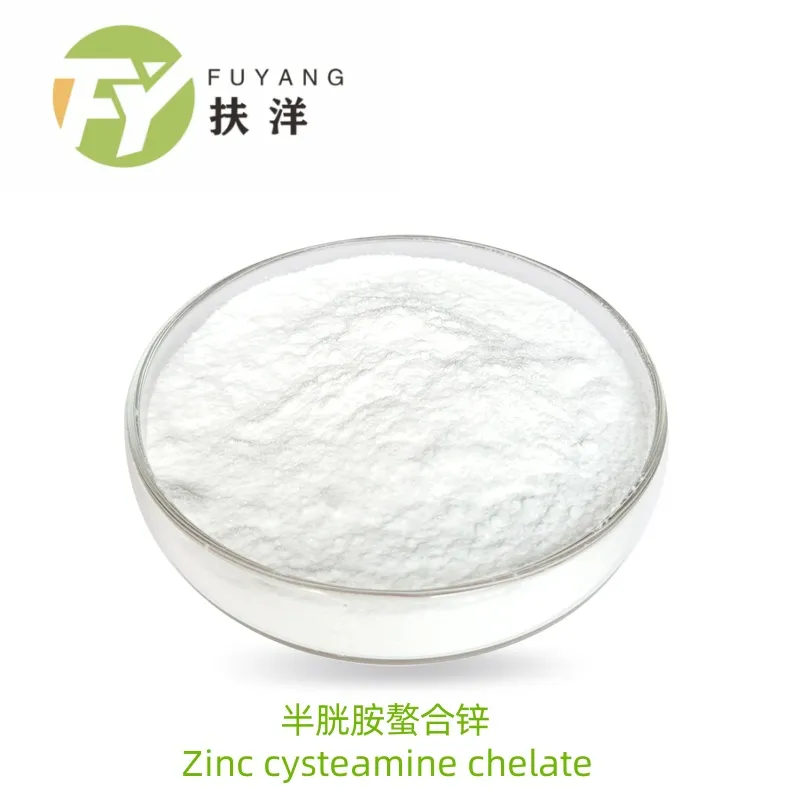
Zinc Cysteine Chelate is a premium organic zinc source engineered through advanced chelation technology, where zinc ions (Zn²⁺) are bonded with L-cysteine molecules. This sophisticated chelate structure (Zn ratio 1:1–2) dramatically enhances bioavailability, ensuring that the essential mineral bypasses common dietary interference and is absorbed directly into the bloodstream, making it an indispensable additive for high-performance animal nutrition, human health, and sustainable agriculture.
By utilizing the amino acid transport channels in the small intestine, Zinc Cysteine Chelate overcomes the limitations of inorganic zinc salts. It not only supports fundamental biological functions such as protein synthesis and cell division but also provides synergistic antioxidant benefits through the sulfhydryl groups of L-cysteine. This dual-action mechanism optimizes growth performance, strengthens immune responses, and promotes overall physiological resilience across various species.
Detailed Parameters
| Product Name | Zinc Cysteine Chelate | Molecular Formula | (C2H6NS)2Zn |
|---|---|---|---|
| Molecular Weight | 217 | Chelation Ratio | Zn = 1:1–2 |
| Primary Component | L-Cysteine & Zinc | Absorption Rate | 30%~50% Higher than Inorganic Zinc |
| Core Function | Immune Modulation & Protein Synthesis | Application Fields | Feed, Human Health, Agriculture |
| Compatibility | Synergistic with Vitamins C & E | Regulatory Compliance | Compliant with GB 13078-2017 |
Key Advantages
Superior Bioavailability
Protects zinc from anti-nutritional factors like phytic acid, increasing absorption by 30%-50% over inorganic sources.
Enhanced Growth Rate
Increases daily weight gain in swine and poultry by 5%-12% while reducing the feed-to-gain ratio.
Immune Optimization
Synergizes with L-cysteine to enhance SOD activity, scavenge free radicals, and reduce oxidative stress.
Reproductive Boost
Improves litter size in sows and increases egg production rates and shell strength in laying hens.
Tissue Regeneration
Promotes keratin synthesis to reduce skin keratinization in pigs and feather loss in poultry.
Eco-Friendly Profile
Low environmental impact due to high absorption, reducing the excretion of excess zinc into the soil.
Product Gallery
Management Platforms
Feed Formulation
Precision dosage adjustment based on animal species and physiological growth stages.
Bioavailability Tracking
Monitoring nutrient uptake to optimize the feed-to-gain ratio and reduce waste.
Health Monitoring
Tracking immune markers and SOD activity to evaluate antioxidant performance.
Regulatory Compliance
Ensuring total zinc content adheres to national standards like GB 13078-2017.
Storage Control
Maintaining airtight and light-proof conditions to preserve chelate stability.
Synergistic Mixing
Coordinating with Vitamin C and E while avoiding high-dose phosphorus interference.
Investment Return Comparison
| Target Animal | Inorganic Zinc (Sulfate) | Zinc Cysteine Chelate |
|---|---|---|
| Swine | Standard Growth | 5%-12% Higher Weight Gain |
| Poultry | Basic Egg Production | Enhanced Shell Strength & Rate |
| Dairy Cows | Common Hoof Issues | Reduced Laminitis Risk |
| Aquatic Life | Standard Molting | Lower Deformity & Higher Survival |
| General ROI | High Excretion/Waste | High Bioavailability/Efficiency |
Frequently Asked Questions
Unlike inorganic salts, the chelated structure protects zinc from phytic acid and fiber interference, allowing direct absorption via amino acid channels and increasing bioavailability by 30%-50%.
It facilitates smooth molting in crustaceans like shrimp and crabs, reduces deformity rates, and enhances lysozyme activity in fish for better immune responses.
Yes, it is effective in foliar fertilizers to correct zinc deficiency (e.g., "white seedling disease" in corn) and improve crop resistance to drought and salinity.
Excessive zinc can impair copper and iron absorption. It is recommended to maintain a Zinc to Copper ratio between 3:1 and 4:1.
It is used in dietary supplements to treat zinc deficiency, support wound healing, manage acne/hair loss, and act as an antioxidant for chronic inflammation.
Avoid concurrent use with high doses of calcium or phosphorus, as they may form insoluble salts that reduce the effectiveness of the zinc.