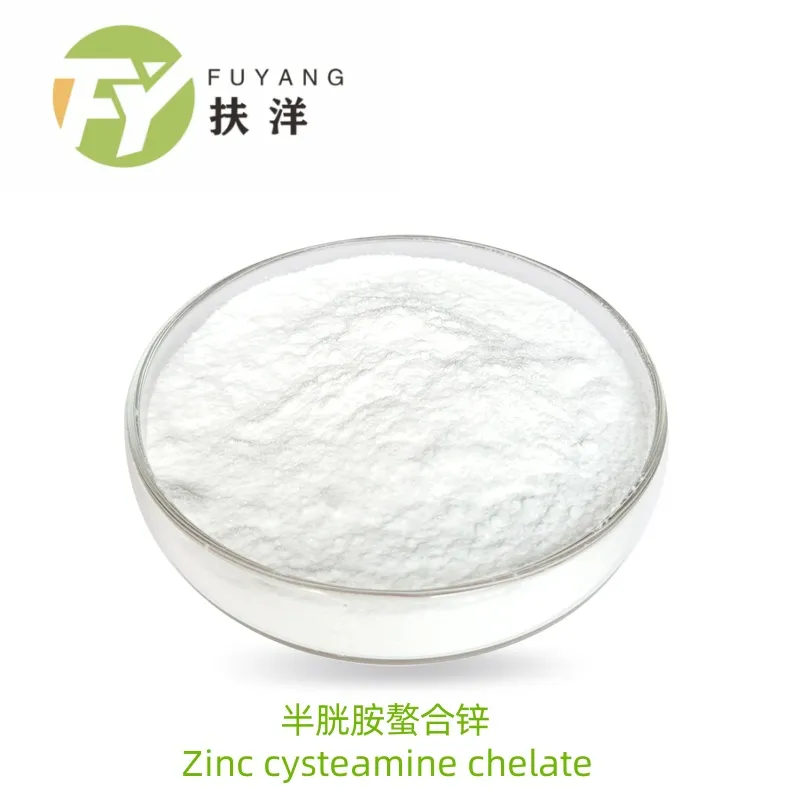
Zinc Cysteine Chelate is a premium organic zinc source engineered through advanced chelation technology, binding zinc ions (Zn²⁺) with L-cysteine molecules. This specialized structure creates a highly bioavailable mineral complex (Zn ratio 1:1–2) that bypasses traditional absorption barriers, making it an essential additive for high-performance animal nutrition, human health supplements, and precision agriculture.
Unlike inorganic zinc salts, Zinc Cysteine Chelate leverages amino acid transport channels in the small intestine, protecting the mineral from anti-nutritional interference such as phytic acid. By combining the essential trace element zinc with the antioxidant properties of L-cysteine, this product significantly enhances immune response, promotes protein synthesis, and accelerates cellular recovery across multiple species.
Detailed Parameters
| Product Name | Zinc Cysteine Chelate | Molecular Formula | (C2H6NS)2Zn |
|---|---|---|---|
| Molecular Weight | 217 | Chelation Ratio | Zn = 1:1–2 |
| Zinc Source | Organic Chelated | Carrier Molecule | L-Cysteine |
| Absorption Path | Amino Acid Channels | Bioavailability | 30% - 50% higher than inorganic Zn |
| Key Function | Immune Modulation | Chemical Nature | Stable Organic Complex |
Key Advantages
Superior Absorption
Bypasses anti-nutritional factors like phytic acid for direct absorption, increasing zinc bioavailability by up to 50%.
Oxidative Stress Relief
Sulfhydryl groups from L-Cysteine synergize with Zinc to boost SOD activity and scavenge free radicals.
Growth Acceleration
Increases daily weight gain in swine and poultry by 5% to 12% while reducing the feed-to-gain ratio.
Reproductive Boost
Enhances litter size in sows and increases the egg production rate in laying hens through hormonal support.
Dermal & Coat Health
Reduces skin keratinization in pigs and feather loss in poultry by promoting keratin synthesis.
Eco-Friendly Profile
Higher absorption leads to lower zinc excretion, reducing heavy metal contamination in the environment.
Product Gallery
Management Platforms
Livestock Nutrition
Optimize growth performance and reduce feed costs in poultry and swine farming.
Ruminant Health
Prevention of bovine laminitis and elevation of zinc levels in dairy milk.
Aquatic Support
Facilitate molting in crustaceans and enhance lysozyme activity in fish.
Human Supplements
Clinical support for acne treatment, hair loss, and immune strengthening.
Crop Foliar Care
Correct "white seedling disease" in corn and "little leaf disease" in fruit trees.
Stress Resistance
Improve plant resistance to drought and salinity through mineral fortification.
Investment Return Comparison
| Animal Category | Recommended Dosage (Zn/kg) | Primary Production Benefit |
|---|---|---|
| Pigs | 0-120 mg | Improved Growth & Hoof Health |
| Hens | 0-100 mg | Higher Egg Production & Shell Strength |
| Dairy Cows | 0-80 mg | Hoof Disease Prevention & Milk Quality |
| Shrimp | 0-50 mg | Facilitated Molting & Lower Mortality |
| General Crops | Customized | Correction of Zinc Deficiency & Stress Resistance |
Frequently Asked Questions
Unlike inorganic Zinc Sulfate, the chelated form is protected from phytic acid and dietary fiber, allowing it to be absorbed via amino acid channels. This increases bioavailability by 30-50% and reduces environmental zinc excretion.
In poultry, it significantly improves the egg production rate and enhances eggshell strength. It also reduces feather loss by supporting keratin synthesis in the skin.
Yes, it is highly effective as a foliar fertilizer to correct zinc deficiency symptoms like "white seedling disease" in corn and enhances overall resistance to salinity and drought.
To avoid the formation of insoluble salts, avoid concurrent high-dose use of calcium or phosphorus. For optimal results, use synergistically with Vitamins C and E to maximize antioxidant effects.
To prevent the impairment of copper and iron absorption, it is recommended to maintain a Zinc to Copper/Iron ratio between 3:1 and 4:1.
It should be stored in airtight, light-proof containers in a cool, dry environment to maintain its stability and potency.