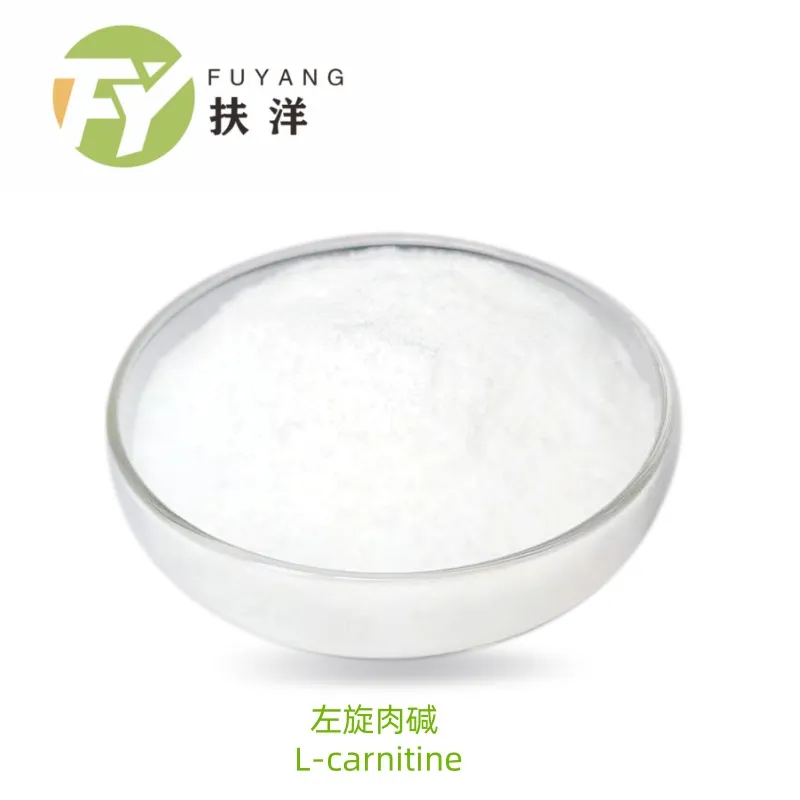
Introduction to L-Carnitine
L-Carnitine, a naturally occurring compound in the human body, plays a vital role in energy production by facilitating the transport of long-chain fatty acids into the mitochondria for oxidation. L-Carnitine is a nutritional enhancer that has gained significant attention for its physiological benefits, particularly in enhancing fat metabolism and supporting overall health. This article provides an in-depth analysis of its chemical properties, technical specifications, key benefits, and applications, along with insights into the company behind this innovative product.
Chemical Composition and Physical Properties
Chemical Formula: C₇H₁₅NO₃
Chemical Name: (R)-3-Carboxy-2-hydroxy-N,N,N-trimethylpropanaminium hydroxide inner salt
Appearance: White or off-white crystalline powder
L-Carnitine is a quaternary ammonium compound that exists in both dextrorotatory (D) and levorotatory (L) forms. However, only the L-isomer is biologically active. Its unique structure allows it to act as a carrier molecule, transporting fatty acids across the mitochondrial membrane to be oxidized for energy. This mechanism is critical for cellular energy production, especially in tissues with high energy demands such as the heart and skeletal muscles.
Product Advantages
The L-Carnitine offered by Hebei Fuyang Biotechnology Co., LTD is produced using precision-controlled purification and refining processes. This ensures a high-purity product with superior physiological activity. Key advantages include:
- Enhanced fat catabolism by transporting long-chain fatty acids into mitochondria
- Reduced glycogen consumption during energy production
- Increased oxidation rate of fats to meet energy demands
- Improved metabolic balance and cellular efficiency
Technical Specifications
The L-Carnitine product meets stringent quality standards, as outlined in the following table:
| Specification | 98% Purity | 50% Purity |
|---|---|---|
| L-Carnitine Content | 97.0–103.0% | ≥50.0% |
| Specific Rotation [α]ᴅ²⁰ | -29–-32° | -14–-17° |
| pH | 6.5–8.5 | 6.5–8.5 |
| Loss on Drying | ≤4.0% | ≤7.0% |
| Residue on Ignition | ≤0.5% | ≤45% |
| Heavy Metals (Pb) | ≤10 ppm | ≤10 ppm |
| Total Arsenic (As) | ≤2 ppm | ≤2 ppm |
Note: Complies with GB 34461-2017 "National Standard for Feed Additive L-Carnitine."
Key Benefits of L-Carnitine
The physiological and metabolic benefits of L-Carnitine are well-documented. Some of its primary advantages include:
- Optimal transporter for long-chain fatty acids: Facilitates the movement of fatty acids into mitochondria, promoting lipid metabolic balance.
- Enhanced β-oxidation: Regulates the acyl-CoA/CoA ratio within mitochondria, improving energy efficiency.
- Improved reproductive performance: Enhances fertility and reproductive outcomes in male livestock and poultry.
- Stress reduction and stamina improvement: Alleviates stress, increases endurance, and accelerates fatigue recovery.
- Enhanced growth in aquatic animals: Boosts growth rates and reduces feed conversion ratios (FCR).
Recommended Dosage by Animal Species
The L-Carnitine dosage varies depending on the animal species. The following table provides general guidelines:
| Animal Species | Swine | Poultry | Fish |
|---|---|---|---|
| Addition Level (mg/kg feed) | 30–500 | 50–150 | 5–100 |
Applications in Agriculture and Animal Nutrition
L-Carnitine is widely used in agricultural and animal nutrition industries to optimize productivity and health. Its applications include:
- Swine: Enhances growth performance and feed efficiency.
- Poultry: Improves reproductive performance and egg quality.
- Fish: Supports faster growth rates and reduces feed conversion ratios.
Company Background: Hebei Fuyang Biotechnology Co., LTD
Hebei Fuyang Biotechnology Co., LTD is a leading manufacturer of high-quality biochemical products, including L-Carnitine. With a commitment to innovation and quality, the company adheres to international standards to ensure the safety and efficacy of its products. Their expertise in precision-controlled purification processes sets them apart in the industry.
Compliance with Industry Standards
The L-Carnitine product meets the requirements of GB 34461-2017, a national standard for feed additives. This compliance ensures that the product is safe for use in animal nutrition and meets rigorous quality benchmarks.
Conclusion
L-Carnitine is a critical compound with wide-ranging applications in human and animal health. Its ability to enhance fat metabolism and support energy production makes it an essential component in modern nutrition and agriculture. L-Carnitine from Hebei Fuyang Biotechnology Co., LTD exemplifies the synergy of scientific innovation and quality control, offering a reliable solution for diverse applications.
References
National Institute of Standards and Technology (NIST) provides critical standards and measurements that ensure the accuracy and reliability of scientific and industrial processes. For more information on standards related to biochemical compounds, visit NIST's official website.