In the complex ecosystem of modern biochemical manufacturing, common amino acids serve as the fundamental building blocks for life, playing a pivotal role in everything from cellular repair to metabolic regulation. As global demand for sustainable protein sources and efficient nutrient delivery systems rises, these organic compounds have transitioned from simple biological components to high-value industrial raw materials. Understanding their chemistry is no longer just for biologists, but is essential for agriculturalists, nutritionists, and food scientists aiming to optimize growth and health across species.
The global market for these compounds is driven by an urgent need to increase food security and enhance the nutritional profile of livestock and crops. With the global population projected to grow significantly by 2050, the efficiency of feed conversion and the resilience of agricultural yields depend heavily on the precise application of specific common amino acids. By bypassing the energy-intensive process of internal synthesis in animals and plants, these supplements ensure that critical biological pathways remain active even under environmental stress.
Integrating high-purity amino acid solutions into industrial workflows allows for a more tailored approach to nutrition and pharmacology. Whether it is enhancing the bioavailability of fertilizers or formulating specialized dietetic feeds for aquaculture, the versatility of these molecules is unmatched. This guide explores the industrial relevance, application strategies, and future innovations surrounding these essential compounds, providing a comprehensive blueprint for professionals in the biochemical and agricultural sectors.
Global Relevance of Common Amino Acids
From a global perspective, the strategic deployment of common amino acids is central to the "One Health" approach, linking human health, animal welfare, and environmental sustainability. According to data aligned with FAO and ISO standards, the optimization of essential amino acids in animal feed can reduce nitrogen excretion by up to 20%, significantly lowering the environmental footprint of industrial livestock farming. This makes the production of high-purity L-Lysine, L-Methionine, and L-Threonine not just a commercial venture, but a necessity for ecological preservation.
The challenge lies in the "limiting amino acid" concept, where the deficiency of a single compound halts the synthesis of all proteins, regardless of the abundance of other nutrients. This biological bottleneck creates a critical dependency on industrial supplementation. By addressing these deficiencies through precise biochemical formulations, global food producers can achieve higher growth rates and better immune responses in livestock, effectively combating the volatility of natural protein sources in various geographic regions.
Defining Amino Acids in Modern Industry
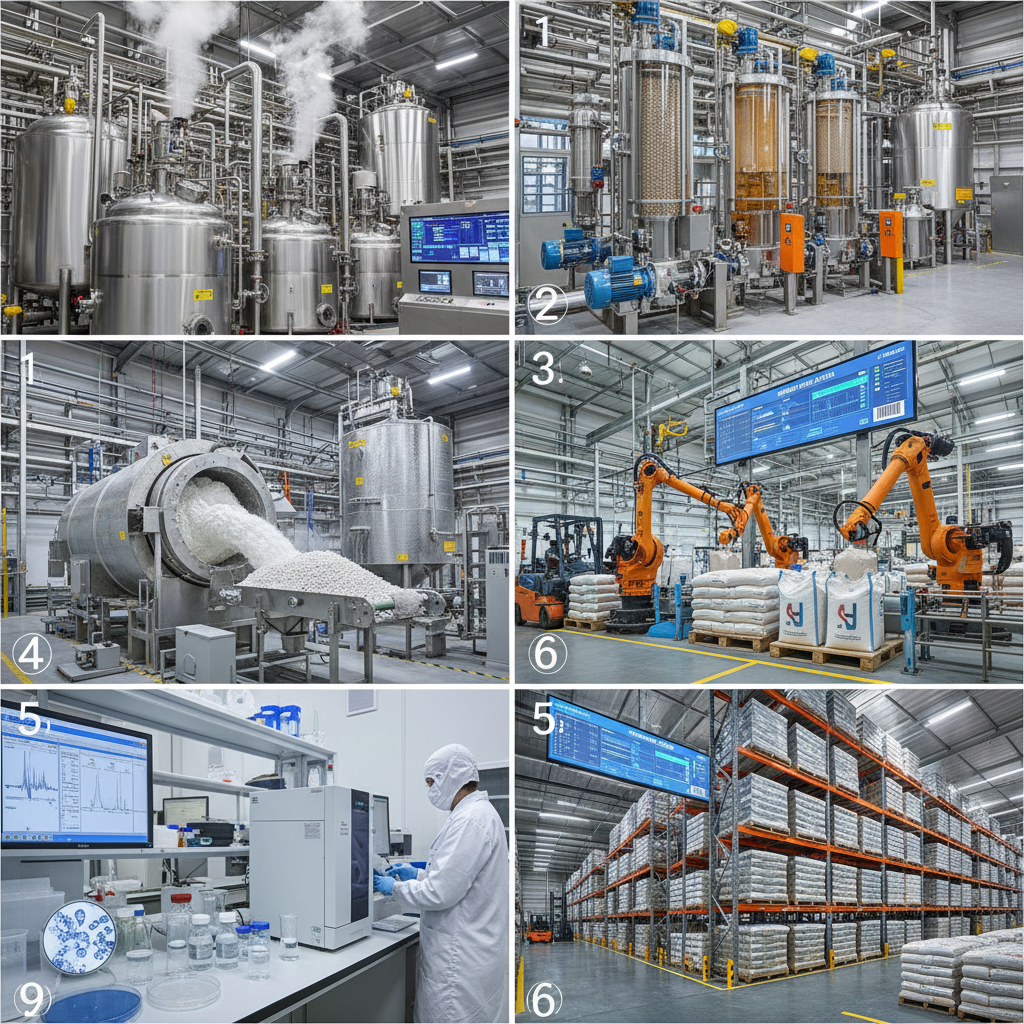
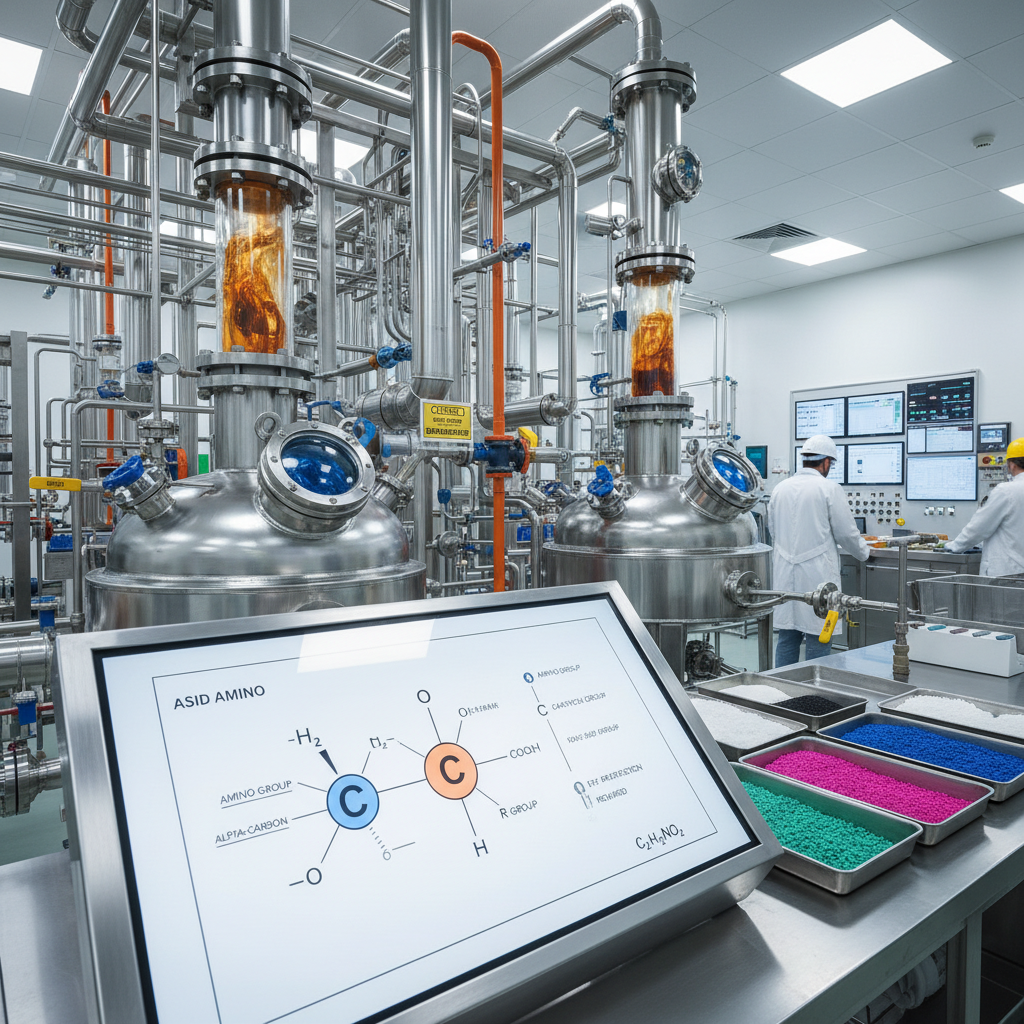
In simple terms, common amino acids are organic compounds consisting of an amino group and an organic acid group, which bond together to form proteins. While they occur naturally in all living organisms, the industrial versions are produced via advanced fermentation or chemical synthesis to ensure stability and concentration. In the context of modern industry, they are viewed as "precision nutrients"—targeted tools used to trigger specific biological responses in plants, animals, and humans.
Their connection to humanitarian needs is profound. In regions facing chronic malnutrition, the fortification of staple foods with essential amino acids can prevent stunted growth and cognitive impairment in children. Similarly, in the agricultural sector, amino acid-based biostimulants help crops withstand extreme weather conditions, such as droughts or salinity, which are increasingly common due to climate change, thereby safeguarding the food supply for vulnerable populations.
The transition from generic protein supplementation to specific amino acid application represents a shift toward "precision biochemistry." By understanding the molecular requirements of a specific species—whether it be a soybean plant or a broiler chicken—manufacturers can create customized blends that maximize efficiency and minimize waste, reflecting a broader industrial trend toward lean and green manufacturing.
Core Components of Amino Acid Efficacy
The effectiveness of common amino acids in commercial applications is primarily governed by their Bioavailability. This refers to the proportion of the nutrient that is absorbed and utilized by the target organism. High-purity formulations prevent the interference of impurities that could otherwise inhibit absorption, ensuring that the investment in supplementation translates directly into growth or health outcomes.
Scalability and Stability are equally critical. For industrial-scale farming or global food distribution, amino acids must remain stable under various storage conditions and resist degradation during the feed pelleting process, which often involves high heat and pressure. Advanced encapsulation technologies are now being used to protect these sensitive molecules, ensuring they reach the gut or the plant root intact.
Finally, Cost Efficiency and Synergy define the commercial viability of these products. The goal is not simply to add common amino acids, but to balance them in a way that creates a synergistic effect. For example, combining specific amino acids with vitamins or minerals can enhance the overall metabolic rate, providing a higher return on investment for the end-user by reducing the total amount of feed required for a specific weight gain.
Global Applications and Use Cases
The practical application of common amino acids spans multiple continents and sectors. In the aquaculture hubs of Southeast Asia, the use of specialized amino acid blends in shrimp and fish feed has revolutionized production, allowing for higher densities without compromising the health of the stock. In these high-humidity environments, amino acids act as immune boosters, reducing the reliance on antibiotics and improving the sustainability of the industry.
In the agricultural belts of North America and Europe, amino acid-based fertilizers are used as biostimulants. Unlike traditional NPK fertilizers, these organic compounds are absorbed more readily by the leaves and roots, triggering the plant's natural defense mechanisms. For instance, during sudden frost events in temperate zones, the application of proline-rich formulations helps plants maintain osmotic balance, preventing cellular collapse and saving entire harvests from environmental shock.
Efficiency Comparison of Common Amino Acids Applications
Advantages and Long-Term Value
The adoption of high-quality common amino acids provides tangible economic and ethical advantages. Logically, the reduction in feed waste leads to direct cost savings for producers and a lower carbon footprint for the planet. By optimizing the protein-to-nitrogen ratio, companies can significantly reduce the runoff of nitrates into groundwater, aligning their operations with global ESG (Environmental, Social, and Governance) standards and avoiding costly environmental penalties.
Beyond the numbers, there is an emotional and ethical value associated with these compounds. Ensuring that livestock have the exact nutritional building blocks they need reduces stress and disease, promoting a more humane approach to animal husbandry. In agriculture, the shift toward amino acid-based biostimulants reduces the chemical load on the soil, fostering a healthier microbiome and ensuring that the land remains fertile for future generations. This transition builds trust between producers and consumers who increasingly demand transparent and sustainable sourcing.
Future Trends and Innovations
The future of common amino acids is being reshaped by the convergence of biotechnology and digitalization. We are seeing a move toward "Synthetic Biology," where engineered microbes are designed to produce rare or specialized amino acids with zero waste. This shift away from traditional chemical synthesis toward bio-based production is a cornerstone of the green energy transition, as it reduces the reliance on petroleum-based precursors.
Digital transformation is also playing a role through the implementation of AI-driven nutrition systems. Smart farms now use real-time sensors to monitor the growth rates and health of animals, automatically adjusting the dosage of amino acids in the feed to match the specific growth stage of the livestock. This "just-in-time" nutrient delivery system maximizes efficiency and prevents the over-supplementation that can lead to metabolic imbalances.
Furthermore, the development of nano-encapsulated amino acids is promising. By wrapping these molecules in biodegradable nano-shells, researchers can control the release timing and location of the nutrients. This means an amino acid can be designed to bypass the stomach and be released only in the lower intestine, or in plants, to be released only during specific heat-stress windows, dramatically increasing the efficacy of the product.
Challenges and Expert Solutions
Despite their benefits, the industry faces challenges regarding purity and consistency. Many low-cost common amino acids on the market contain impurities or incorrect isomeric forms (such as D-amino acids instead of the biologically active L-forms), which can actually inhibit growth. The solution lies in the implementation of rigorous HPLC (High-Performance Liquid Chromatography) testing and adherence to international pharmaceutical-grade standards, even for agricultural products.
Another limitation is the volatility of raw material costs, often tied to the price of corn or sugar used in fermentation. Expert insights suggest a transition toward using agricultural waste—such as corn stover or sugarcane bagasse—as feedstocks for amino acid production. This "circular economy" approach not only stabilizes costs but also turns a waste stream into a high-value product, enhancing the overall sustainability of the supply chain.
Finally, the lack of specialized knowledge among end-users often leads to improper application. To overcome this, leading manufacturers are shifting from being "product sellers" to "solution providers," offering comprehensive nutritional consulting and precision dosing software. By educating the farmer and the nutritionist, the industry ensures that the biochemical potential of these compounds is fully realized.
Comparative Analysis of Common Amino Acids Industrial Grades
| Product Grade |
Purity Level (%) |
Primary Application |
Stability Score (1-10) |
| Technical Grade |
85% - 92% |
General Fertilizers |
6 |
| Feed Grade |
98% - 99% |
Livestock Nutrition |
8 |
| Food Grade |
99% + |
Dietary Supplements |
9 |
| Pharma Grade |
99.9% + |
Injectables/IV Fluids |
10 |
| Bio-Stim Grade |
90% - 95% |
Crop Stress Relief |
7 |
| Custom Blend |
Variable |
Specialized Aquaculture |
8 |
FAQS
Essential amino acids cannot be synthesized by the body or plant in sufficient quantities and must be obtained through diet or supplementation. Non-essential amino acids can be produced internally. In industrial applications, we focus primarily on essential amino acids like Lysine and Methionine because they are the "limiting factors" that restrict growth if not provided externally.
Certain amino acids, such as Proline, act as osmolytes. When applied to crops, they help the plant cells retain water and maintain turgor pressure during periods of water scarcity. This prevents the denaturation of proteins and protects the cellular membrane, allowing the plant to survive and recover more quickly from drought stress than untreated crops.
They do not replace protein entirely, but they allow for the reduction of expensive, high-protein raw materials like soybean meal. By adding crystalline amino acids to balance the profile, farmers can use lower-protein bases while still meeting the animal's precise nutritional needs, which lowers costs and reduces nitrogen waste in the environment.
It depends on the production method. Amino acids produced via natural fermentation of organic substrates are often accepted in organic systems, whereas those produced via pure chemical synthesis may not be. Always check the specific certification (such as USDA Organic or EU Organic) and the manufacturing process of the supplier to ensure compliance.
Common amino acids should be stored in a cool, dry, and well-ventilated area, away from direct sunlight and moisture. Since many amino acids are hygroscopic (they absorb water from the air), it is critical to keep containers hermetically sealed. Using moisture-proof liners and temperature-controlled warehouses is recommended for long-term stability.
Foliar spraying is generally the most effective method for rapid absorption, as amino acids can enter the plant through the stomata. However, soil drenching is also useful for establishing root health. The timing is key—applying them during early growth stages or just before a predicted stress event (like a heatwave) yields the best results.
Conclusion
In summary, common amino acids represent far more than simple biological components; they are critical drivers of efficiency in the global food and health supply chains. From reducing the environmental impact of livestock farming to safeguarding crops against a volatile climate, the strategic application of these compounds allows for a precision-based approach to nutrition. By balancing purity, stability, and bioavailability, industries can unlock higher yields, better animal welfare, and more sustainable agricultural practices.
Looking forward, the integration of synthetic biology and AI-driven dosing will further refine how we utilize these essential molecules. For businesses and producers, the transition toward high-purity, bio-based amino acid solutions is not just a trend but a strategic necessity to remain competitive in a green economy. We encourage professionals to move beyond generic supplementation and embrace tailored biochemical strategies to ensure long-term viability and ecological harmony. Visit our website for more professional solutions: www.hbfuyangbio.com